Chongqing: A City With No Flat Ground
Bridges over rivers, a monorail through an apartment block, and hotpot older than the one in Chengdu. Two nights, and most of them after dark.
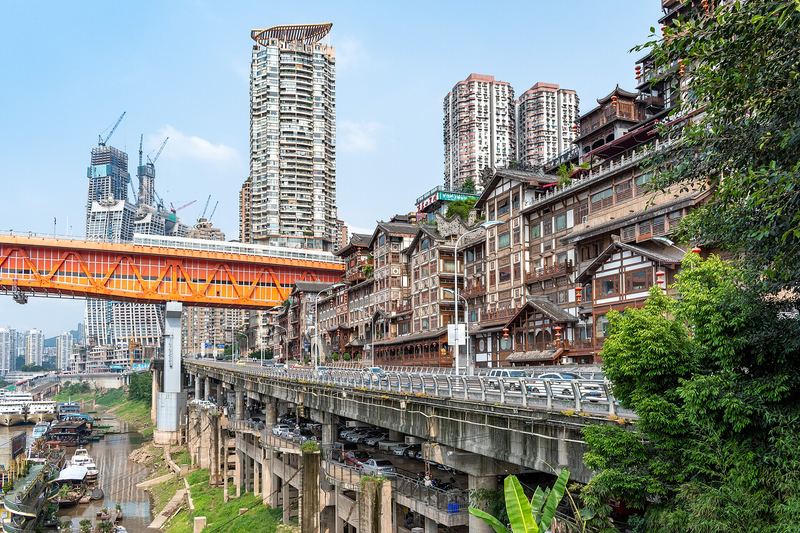
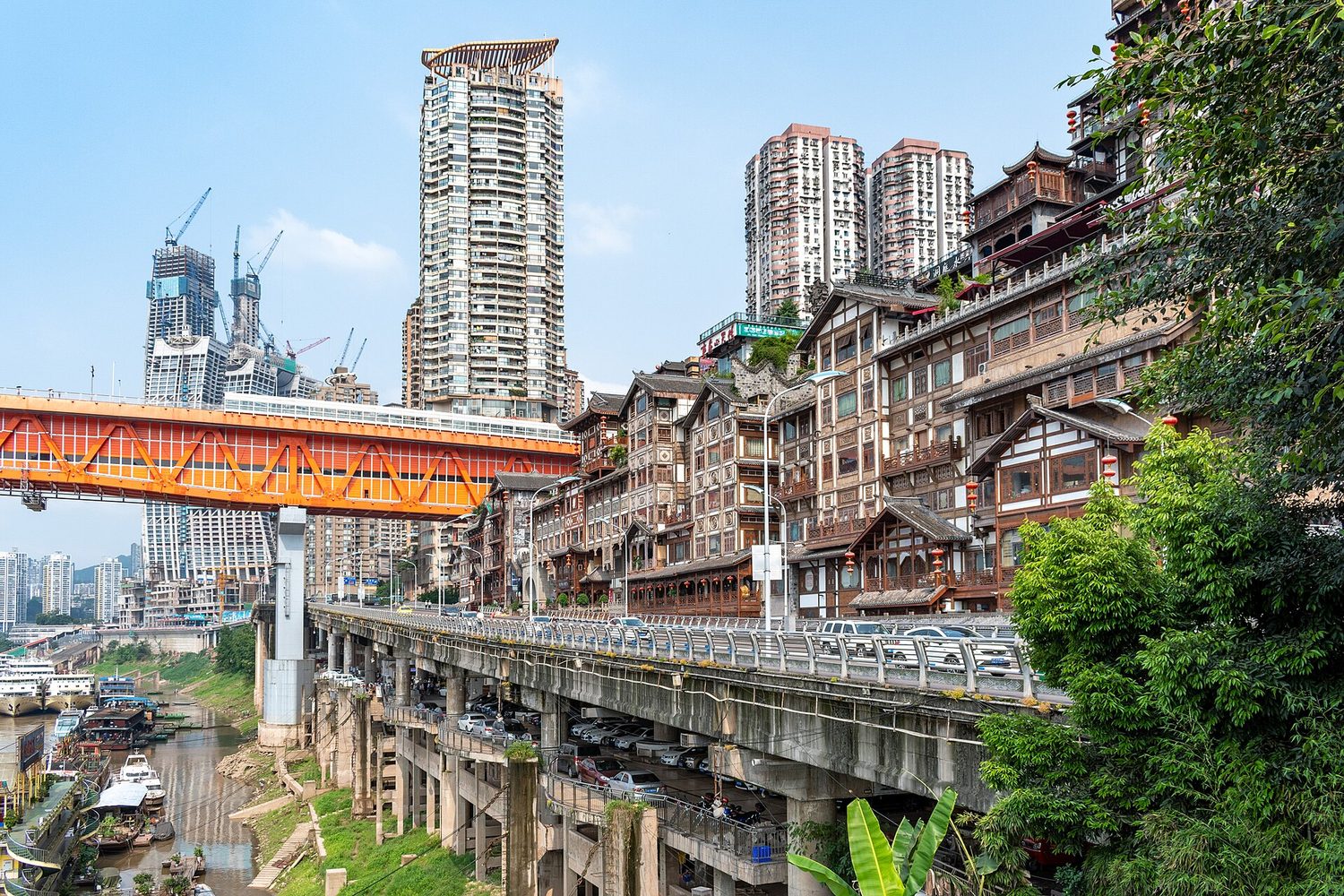
Chongqing is built on two rivers and a set of hills, and the city has responded by stacking itself. Roads run above rooftops, the eighth floor of a building opens onto a street, and the monorail at Liziba goes through a residential block on line 2. Nothing here is on the level, and after a day of it your legs know.
It was the wartime capital during the 1930s and 1940s, which explains the scale of a place that most Western travellers have never heard of. It has 32 million people in the municipality, a skyline to match Shanghai, and a street food culture built on chilli and offal.
What things cost
| Thing to do | Price | Notes |
|---|---|---|
| Hongya Cave | Free | Eleven storeys of timber on the riverbank, best after 19:00 |
| Yangtze River cableway | ¥30 | One way, five minutes, it is public transport |
| Metro and monorail | ¥2 – ¥7 | Distance-based; line 2 goes through the building at Liziba |
| River night cruise | ¥98 – ¥158 | 45 minutes to 90 minutes depending on the boat |
| Ciqikou old town | Free | Tea houses and ginger candy, busy at weekends |
| Three Gorges Museum | Free | Closed Mondays, needs a booked slot |
| Dazu rock carvings | ¥115 | Two hours out, a full day trip |
Hongya Cave is the postcard: eleven levels of timber frame cascading down to the Jialing River, glowing yellow at night. It is free, it is packed after 20:00, and the best photographs are from across the road on the Qiansimen bridge rather than from inside, where you are in a shopping street.
Understanding the geography
The centre is a peninsula where the Yangtze meets the Jialing, and Jiefangbei is its commercial heart. South of the rivers, Nan’an gives you the skyline view back across the water; north, Guanyinqiao is where locals eat and shop. Getting between them is a matter of bridges and tunnels, and the metro is nearly always faster than a taxi.
Distances are deceptive. Something 600 metres away on the map may be 40 metres above or below you, with no direct route between. Use the metro entrances as landmarks and accept that a taxi driver may need to cross a bridge to reach the other side of the same street.
The food, and how to survive it
Chongqing hotpot is older and rougher than Chengdu’s. The pot is beef tallow and chilli, the standard order is tripe, aorta, potato slices and lotus root, and the bill for two with beer runs ¥200–280. Noodles for breakfast — xiaomian, with chilli oil and peanuts — cost ¥10–15 and are eaten standing up at pavement stalls.
Arriving
Jiangbei airport is 20 km north-east; metro line 10 runs to the centre in 45 minutes for ¥7–9, and a taxi is ¥80–120. Chongqing North and Chongqing West are the main rail stations, with North better placed for the centre on line 3 and the loop line. High-speed trains from Chengdu take 1h20–2h for ¥154.
For hotels, Jiefangbei puts you in the middle of everything with rooms at ¥350–700. Nan’an has newer towers with the view back at the city for ¥400–900. Staying in Shapingba is cheaper at ¥200–400 and adds twenty minutes to every trip.
When to go, and how long
Spring and autumn are the seasons. Summer is brutal — high thirties with humidity, and the hills mean every walk is a staircase — and the city is nicknamed the fog capital for the grey damp of winter. October and April are the months to aim at.
Two nights is enough for the centre, one evening on the river and a hotpot. Add a third for the Dazu carvings, which are 500 metres of Buddhist rock sculpture two hours out of town, or for Wulong, where the karst bridges are a 2.5-hour bus ride away and deserve a night on their own. A day in the city costs ¥450–600 including accommodation.
Questions people actually ask
Is Chongqing worth visiting if I have already seen Chengdu?
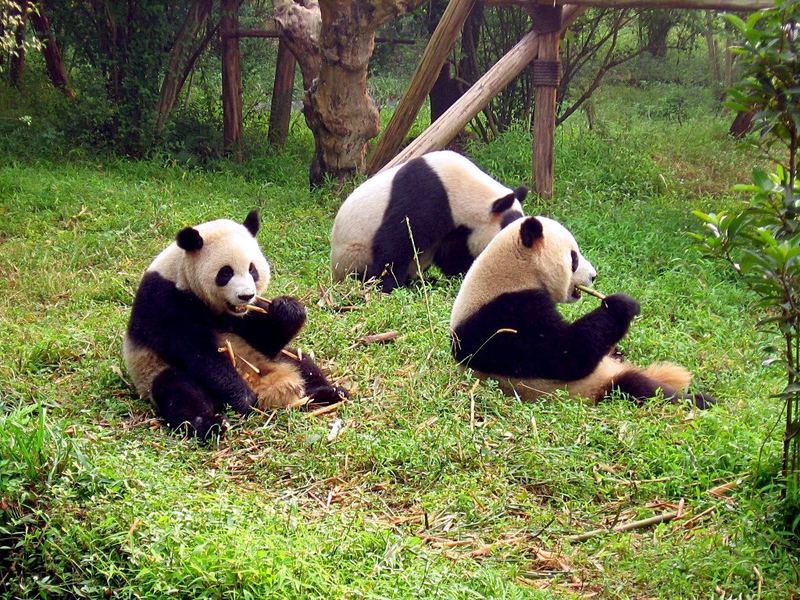
Yes, and they are not substitutes. Chengdu is flat and relaxed with pandas and tea houses; Chongqing is vertical, loud, and at its best after dark. The train between them is ninety minutes, so most people do both.
How does the metro work in such a hilly city?
Better than the roads do. Fares are ¥2–7 by distance, signs and machines carry English, and lines 2 and 3 run on elevated track with the views. The monorail through the building at Liziba is on line 2 and costs the price of a normal ride.
What should I eat in Chongqing?
Hotpot, once, with the oil bowl. Xiaomian noodles for breakfast, which locals eat at pavement stalls for ¥10–15. And suanlafen, sweet potato noodles in a sour chilli sauce, for about ¥12, which is the dish most visitors never try.
Metro lines 5, 9 and the loop line have extended the reachable area considerably since 2023; fares quoted here are distance-based.