Chengdu: Pandas, Hotpot, And The Gateway To Western Sichuan
The city that runs at the speed visitors imagine the rest of China doesn’t. Two days for Chengdu itself, and it’s the right jumping-off point for Leshan, Emei and the Tibetan foothills.
Chengdu runs slower than the coastal cities. People sit in tea houses for three hours over a ¥40 pot of green tea, mahjong tiles clack from behind bamboo screens, and nobody in a hurry expects you to be in one either. It’s a genuinely pleasant place to land after Shanghai.
It’s also the obvious base for western Sichuan: Leshan’s giant Buddha is an hour away by train, Mount Emei is a day, and the road west towards the Tibetan plateau starts here. Give the city two days, three if you want a hotpot evening and a teahouse afternoon rather than a checklist.
Arriving: TFU or Shuangliu
Tianfu International (TFU) opened in 2021 and took over most long-haul and much of the domestic traffic. It’s about 50 km south, and Metro Line 18 reaches the southern part of the city in roughly 40 minutes for ¥8–10. Shuangliu (CTU) is only 20 km out, on Metro Line 10, and is far more convenient when you can get a flight into it — check before you book a hotel, because the two are 50 minutes apart.
The panda base, done right
[object Object]
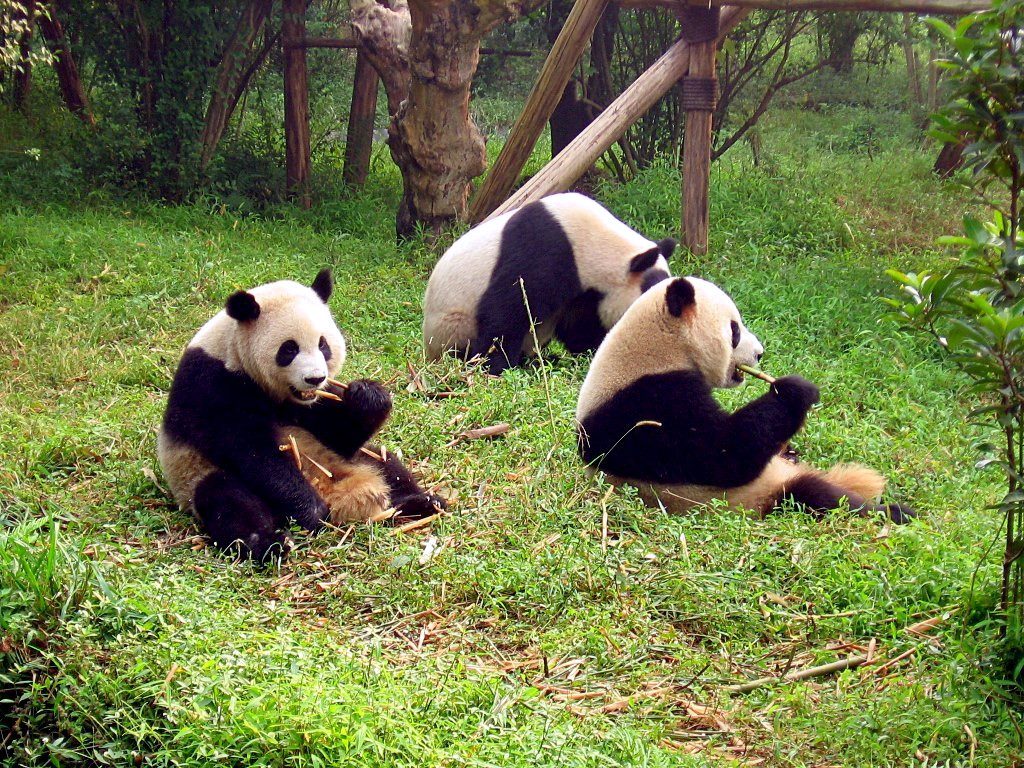
The base sits about 10 km north of the centre and covers a lot of ground up a hill, so wear shoes you can walk in. Two to three hours is enough. There’s a separate, quieter research base at Dujiangyan if you want volunteering-style experiences, but the main one is where the nursery cubs are.
Hotpot, and how to order it
You order a pot — half spicy, half clear if you ask for yuan yang — and raw plates priced individually: thin-cut beef, tripe, lotus root, potato slices, mushrooms. Cook them yourself in the boiling broth. Dinner runs ¥80–150 a head with drinks, and the sesame oil dipping bowl is not optional.
Rail and onward travel
| Route | Journey time | Second class |
|---|---|---|
| Chengdu East → Xi’an North | about 3h | ¥263 |
| Chengdu East → Chongqing | 1h30 – 2h | ¥154 |
| Chengdu East → Leshan | about 1h | ¥54 |
| Chengdu → Jiuzhaigou (air) | 1h flight | ¥600 – 1,200 |
Leshan is the easy day trip: an hour on the train, then a local bus or taxi to the Giant Buddha, which is ¥80 to enter and 71 metres of stone carved into a river cliff. Go early and walk the stairway down past the feet, or take a boat from the river for the full-figure view without the queue.
Where to stay and what it costs
Base yourself around Chunxi Road, Taikoo Li or the Wide and Narrow Alleys if you want to walk to dinner. Mid-range doubles run ¥450–800. The Tianfu New Area to the south is shiny, generously planned and a very long way from anything you came to see — avoid it unless you have business there.
A tea house afternoon costs ¥30–60 for a pot with refills of hot water. Street snacks — skewers, dan dan noodles, sweet potato balls — are ¥10–20 a portion. Budget ¥600–900 a day including a comfortable room, and you’ll eat extremely well.
Season
[object Object]
Mistakes people repeat here
- Coming for the pandas and leaving the same afternoon. The pandas take three hours; the city deserves the rest.
- Booking a hotel in Tianfu New Area because it’s new and cheap, then spending an hour on the metro each way.
- Assuming every dish is fiery. Sichuan food is famous for mala, but plenty of it is mild, sour or sweet.
- Trying to fit Mount Emei into a single day from the city. It’s a two-day trip with an overnight on the mountain.
Chengdu: the slow city, done properly
Chengdu’s trick is that its headline attraction — pandas — requires a 6:30 alarm and everything else rewards sleeping in. Do the pandas first, then adopt the teahouse rhythm the city is famous for. What do people actually do here all afternoon? They sit, they drink ¥20 tea, and someone trims their earwax with a tuning fork. It is glorious.
- Be at the Panda Breeding Base when gates open (7:30, ¥55): pandas are fed and active before 10, then they sleep like everyone else in Chengdu.
- Take a teahouse seat at Heming in People’s Park — ¥20–30 for bottomless green tea, and the itinerant ear-cleaners are a national institution.
- Dujiangyan irrigation works make an easy half-day by intercity rail (about ¥15, forty minutes); go to the fish-mouth levee first before the heat builds.
- Eat where the students do: the food street at Jianshe Road or Kuixinglou alley, both lined with skewer shops under ¥1 a stick.
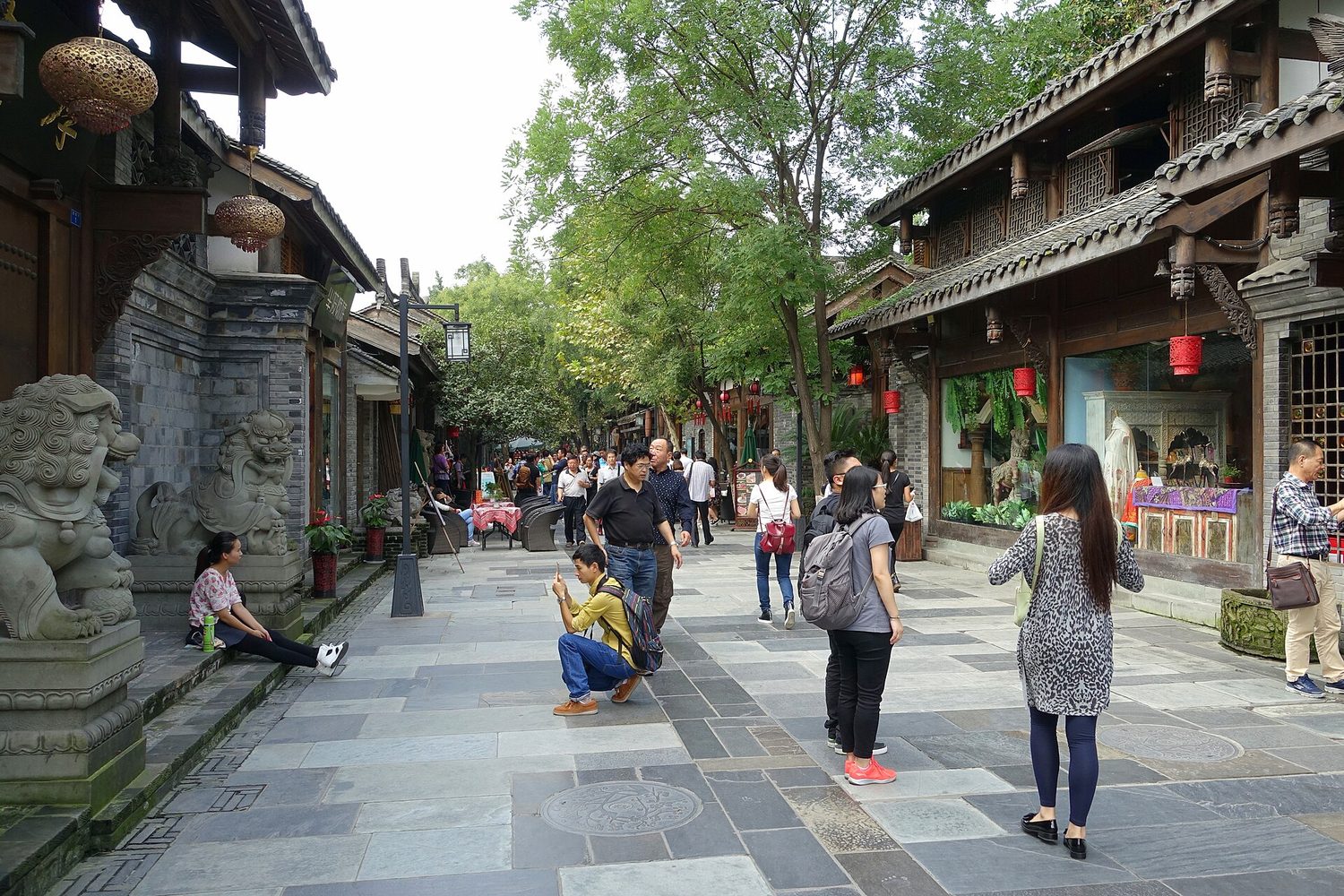
- Jinli and Kuanzhai alleys after 9 p.m. are lantern-lit and half-empty — the daytime versions are maze-of-selfie-sticks experience.
Eating Chengdu: mala and everything after
The numb-and-hot duo — Sichuan pepper plus chili — runs through everything here, from hotpot broth to a ¥7 bowl of noodles. You control the dial by saying the right word when ordering: wei la for mild, zhong la for the middle. What happens if you say nothing? The kitchen assumes you are brave. You are not.
- Hotpot (xiao long kan or any branch of Shu Jiu Xiang), around ¥90–110 a head — split the pot: one red, one mushroom, mercy for tomorrow.
- Chuanchuan skewers at Kang Er Jie (about ¥1 a stick, order by the fistful) — hotpot’s casual little sibling, eaten off a shared boiling pot.
- Tianshui mian, sweet-spicy noodles with sesame, ¥8–10 at Dongzikou; the name says sweet water, the afterburn disagrees.
- Rabbit head at Shuangliu, ¥10–12 each — crack the skull like a walnut, mine every crevice; it sounds grim and tastes like bar snack genius.
Sichuan dialect: vocabulary of comfort
Sichuan-hua is Southwestern Mandarin — the sentence structure matches, the tone contours slide, and the vocabulary leans hard into comfort words. Teahouse uncles will run whole conversations in it around you. Four words carry most of the emotional range.
| Standard | Chengdu says | Sounds like | Meaning |
|---|---|---|---|
| shūfu | bāshì | bah-shr | comfortable, great |
| hǎo de | yàodé | yow-duh | okay, will do |
| duōshao qián | hǎoduō qián | how-duo chyen | how much |
| méiguānxi | mò lái tóu | mo lie toe | it doesn’t matter |
| liáotiān | bǎi lóngménzhèn | bye long-men-jen | to chat (lit. "set up the dragon gate array") |
Say bāshì after the first sip of tea and watch the whole table adopt you. It is the highest praise this city issues, and it costs nothing.
Questions people actually ask
How many days do I need in Chengdu?
Two full days covers the panda base, one hotpot evening, the alleys and a tea house. Add a third if you want Leshan. If you’re going on to Jiuzhaigou or the western mountains, two days in the city is plenty and the rest of your time is better spent out west.
Is the panda base ethical to visit?
The Chengdu Research Base is a breeding and conservation facility as well as a visitor attraction, and it publishes its research. Crowds are the real issue rather than conditions — arriving at opening time is better for you and less stressful for the animals. Avoid any outfit offering to let you hold a panda; no legitimate facility does that.
Can I manage without speaking Chinese?
In the main areas yes, and hotpot restaurants increasingly order by tablet with pictures. Two phrases carry you a long way: bu la for “not spicy” and zhe ge for “this one”, which lets you point at a neighbour’s table and get exactly what they’re having.
Checked against operator timetables and official ticketing in September 2026. Tianfu International (TFU) opened in 2021 and now takes most long-haul traffic; always confirm which airport your ticket uses.