Guilin And Yangshuo: The Karst Landscape, Planned Properly
The hills on the 20-yuan note are not Photoshopped. But where you sleep, and which boat you book, makes the difference between the best scenery in China and a coach tour of a riverbank.
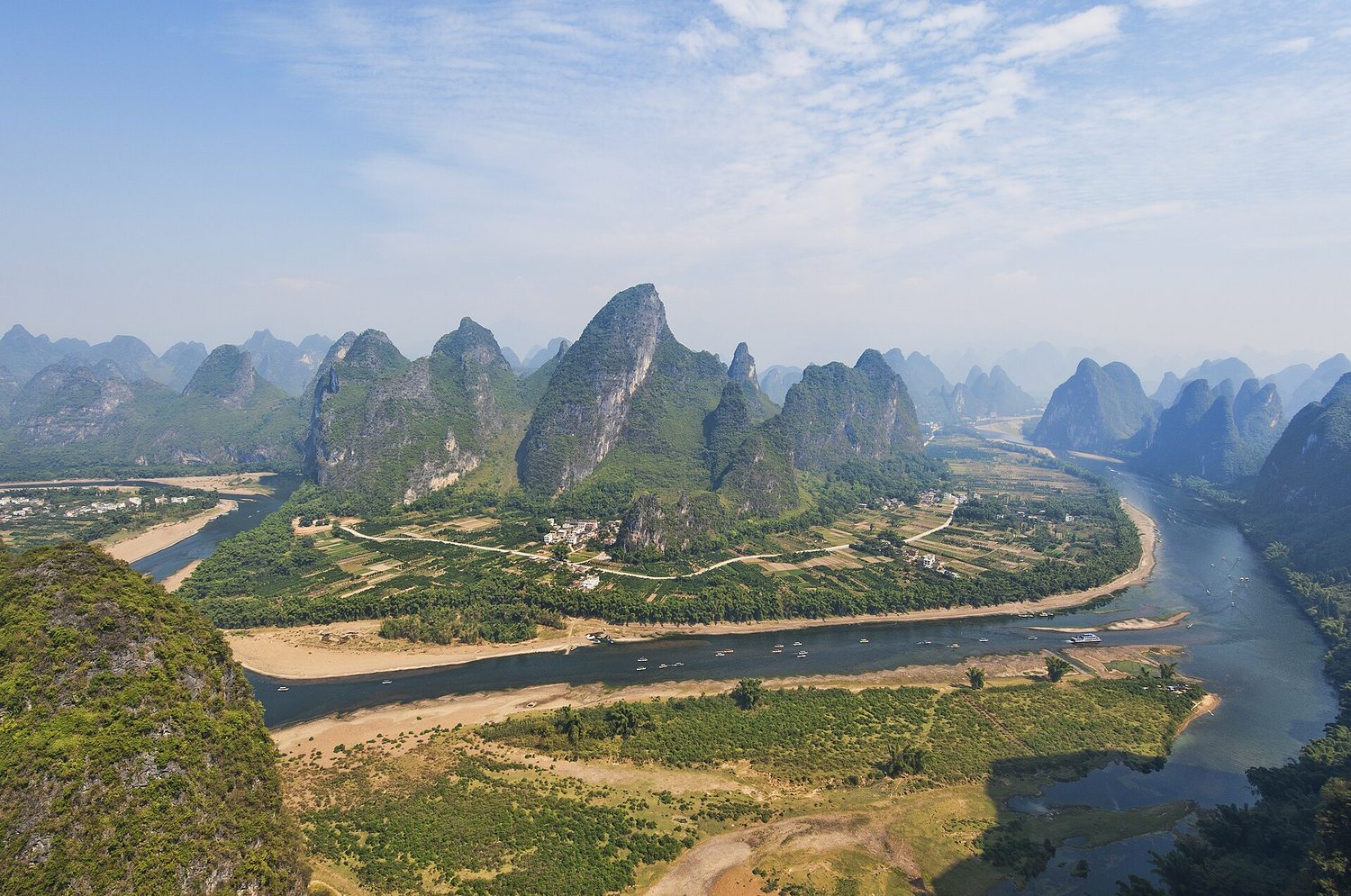
Guilin’s landscape is the one printed on the back of a 20-yuan note, and standing in front of it is oddly disorienting: the karst towers don’t look real. They’re the eroded remnants of a limestone seabed, a few hundred metres high, dropped at random across a flat green plain.
The trick is that Guilin city is a place you leave. The scenery is on the river between Guilin and Yangshuo, and Yangshuo — a small town 65 km downstream where the hills crowd right up to the street — is where you should actually sleep.
Arriving
Liangjiang (KWL) is about 30 km from the city centre. The airport bus takes 40 minutes and costs ¥20–25; a taxi is around ¥100. Trains are often the better option anyway: Guangzhou South to Guilin North is 2.5–3 hours for ¥139, and Nanning is about two and a half hours.
The Li River: boat, raft, or neither
The classic cruise runs 83 km downstream from Mopanshan pier to Yangshuo in about four hours, with fares from roughly ¥215 for a standard seat to ¥360 for the upper-deck class with a buffet. It departs in the morning and lands you in Yangshuo with your luggage, which is exactly the point — you’re not going back.
The alternative is a bamboo raft on the shorter Yangdi to Xingping stretch, which is the bit on the banknote. A raft for two runs ¥120–200 and takes about an hour and a half. It’s quieter, closer to the water, and doesn’t involve a buffet. You can also simply take the bus to Yangshuo for ¥25 and see the same hills from a riverside path for free.
Yangshuo itself
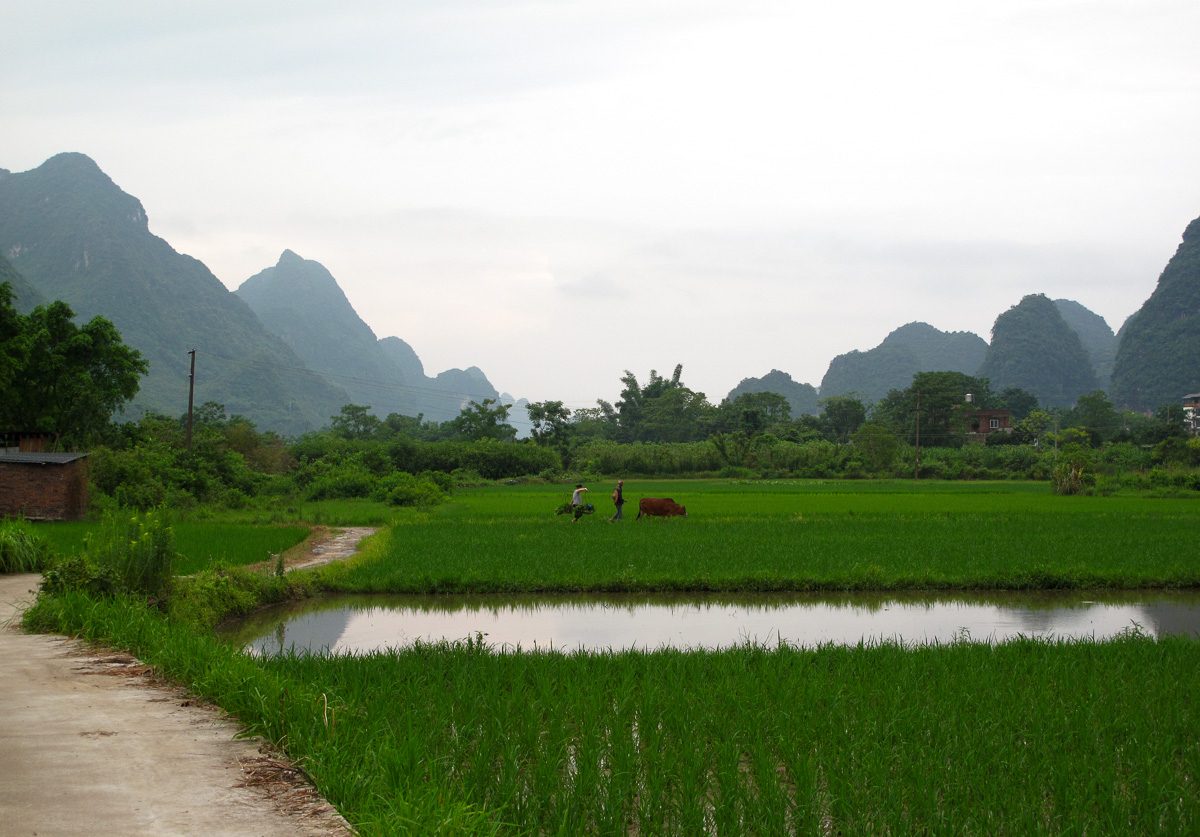
The town is touristy in a way that’s either charming or exhausting depending on your tolerance for cormorant-fishing shows and “West Street” beer signs. The reason to stay is what’s five minutes outside it: flat cycling roads through rice paddies with karst towers on every side, climbing on real limestone, and the Yulong River valley, which is quieter than the Li and prettier.
Bike hire is about ¥30 a day. A guesthouse outside the town centre runs ¥200–400 and often has a rooftop aimed directly at the hills. Give it two nights, not one.
Longji rice terraces
About two and a half hours north of Guilin by road, the Longji terraces step down a mountainside in contours that were cut by hand over centuries. Entry is ¥80. Most visitors day-trip it, which means four hours of driving to see them in the flat light of early afternoon.
Stay one night in a wooden guesthouse up in the villages instead. The light at dawn on a water-filled terrace is the reason photographers haul tripods up there, and you’ll have the paths to yourself until about nine.
How many days
| Plan | Days | What you get |
|---|---|---|
| River and Yangshuo only | 2 | Cruise down, cycle for a day, train out |
| River, Yangshuo and terraces | 3 | The full landscape; one night up in Longji |
| Guilin city plus river | 1 | Rushed; only worth it if you’re on a schedule |
Three days is the sweet spot and four is better if you cycle seriously or climb. One day is a coach tour with extra steps.
Season
April to October, with a caveat: May and June are the wet months, which is when the terraces are flooded and most photogenic and when the cruises are most likely to be cancelled. September and October give you stable weather and gold harvest colour. Winter is green-grey and cold but nearly empty.
Mistakes people repeat here
- Booking a “river view” hotel in Guilin city. The hills are 60 km away.
- Day-tripping the Longji terraces, arriving at 14:00 and wondering what the fuss is about.
- Bringing luggage onto the bamboo raft section. It goes on the bus, separately, and meets you in Yangshuo.
- Coming in January expecting the lush green of the photographs; the rice fields are stubble then.
Questions people actually ask
Should I stay in Guilin or Yangshuo?
Yangshuo, almost always. Guilin city’s real assets are the airport, the rail station, the departure pier and the rice noodles — a bowl runs ¥6–10 and is worth an early breakfast. Everything you came to look at is downstream, so sleep there and treat Guilin as the place you arrive.
Is the Li River cruise worth ¥215 versus the ¥25 bus?
If it’s your first time and the weather is clear, yes — the four hours downstream with commentary and lunch is the classic way to see it, and the scenery genuinely does deliver. If the forecast is grey or the river is high, take the bus and spend the difference on a raft on the Yulong instead.
Can I cycle around Yangshuo without a guide?
Yes, and it’s the best thing to do there. The roads through the paddy fields are flat and mostly signed; rent a bike for ¥30, take water, and turn back when the tarmac ends. A guide is only worth it if you want someone to explain the villages you’re passing through.
Boat fares and terrace entry fees checked against published ticket channels in September 2026. Cruises are suspended after heavy rain — the river level, not the calendar, decides.