3 Days in Guilin And Yangshuo: River Down, Villages Back
The landscape is the itinerary here. Float through it once, then spend two days cycling and rafting between villages at the pace it deserves.
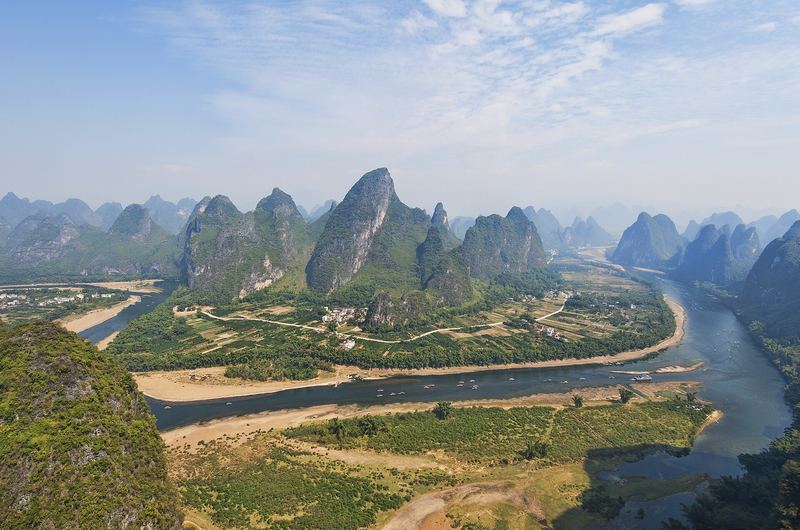
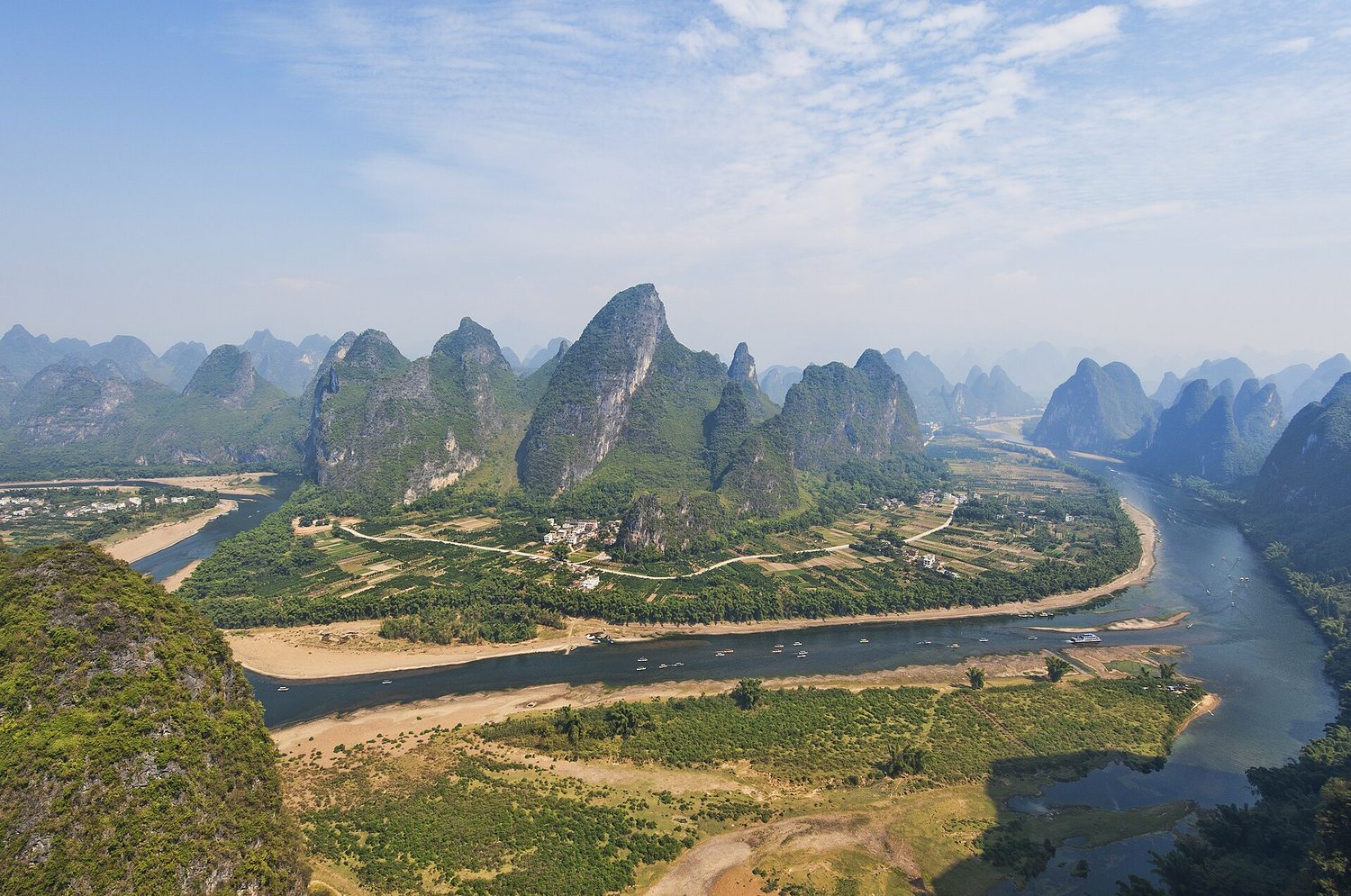
Guilin’s scenery is not spread evenly. The best of it lies along 60 km of river between the city and Yangshuo, and the second-best is in the villages either side of the Yulong tributary, which you can only reach on two wheels or by raft. Everything else — the caves, the parks, the night cruises — is optional.
Three days lets you do what most people miss: take the boat downstream on day two, then stay out in the villages rather than turning round and going back to the city for the night.
Three days, river first then countryside
| Day | Morning | Afternoon | Evening | Tickets |
|---|---|---|---|---|
| 1 — Guilin | Arrive, walk the two rivers lakes | Reed Flute Cave or Elephant Trunk Hill | Night cruise on the four lakes | ¥90 – ¥260 |
| 2 — Li River | Boat departs 09:00 | Arrive Yangshuo 13:30, West Street | Beer fish by the river | ¥210 – ¥460 |
| 3 — Villages | Yulong raft from 08:30 | Bicycle the loop, Moon Hill | Depart from Yangshuo station | ¥150 – ¥250 |
If you have a fourth day, use it for the Longji rice terraces, 2.5 hours north of Guilin, ¥80 to enter, where the paddies are flooded in May and golden in late September. It deserves an overnight and cannot be done justice in a short day trip.
Day 1 — Guilin itself, briefly
Guilin city is not the destination and you should not spend more than half a day in it. The centre is walkable, with two rivers and four lakes threaded through it, and the lake circuit is pleasant on foot in the evening when the bridges are lit. The night cruise costs ¥185–260 depending on the class of boat and is more elaborate than the scenery warrants.
Of the two classic sights, Reed Flute Cave at ¥90 is a large limestone cave with coloured lighting that divides opinion, and Elephant Trunk Hill at ¥55 is a rock shaped like its name beside the river. Choose one, not both, and keep the afternoon free for an early dinner.
Day 2 — The cruise, and why to sit on the right
The Li River boat leaves between 09:00 and 10:00 depending on the pier and takes four to four and a half hours to Yangshuo, with lunch included in a style that reflects the price. Standard fares run ¥210–270; upper decks and VIP boats run ¥360–460. The stretch around Nine Horse Hill, roughly two hours in, is the best of it.
Sit on the right side leaving Guilin and go up to the open deck when the boat passes the first cluster of peaks; the indoor seats are for the middle two hours. Bring cash for drinks, since the on-board card machines are unreliable, and keep your ticket for the landing stage at Yangshuo.
You arrive around 13:30 into a town of 300,000 that has been on the backpacker circuit since the 1980s. West Street is the busy spine of it and worth one walk; the beer fish that Yangshuo is known for — a whole carp cooked with beer and tomatoes, ¥80–150, enough for two — is best eaten at a family restaurant one street back from the river.
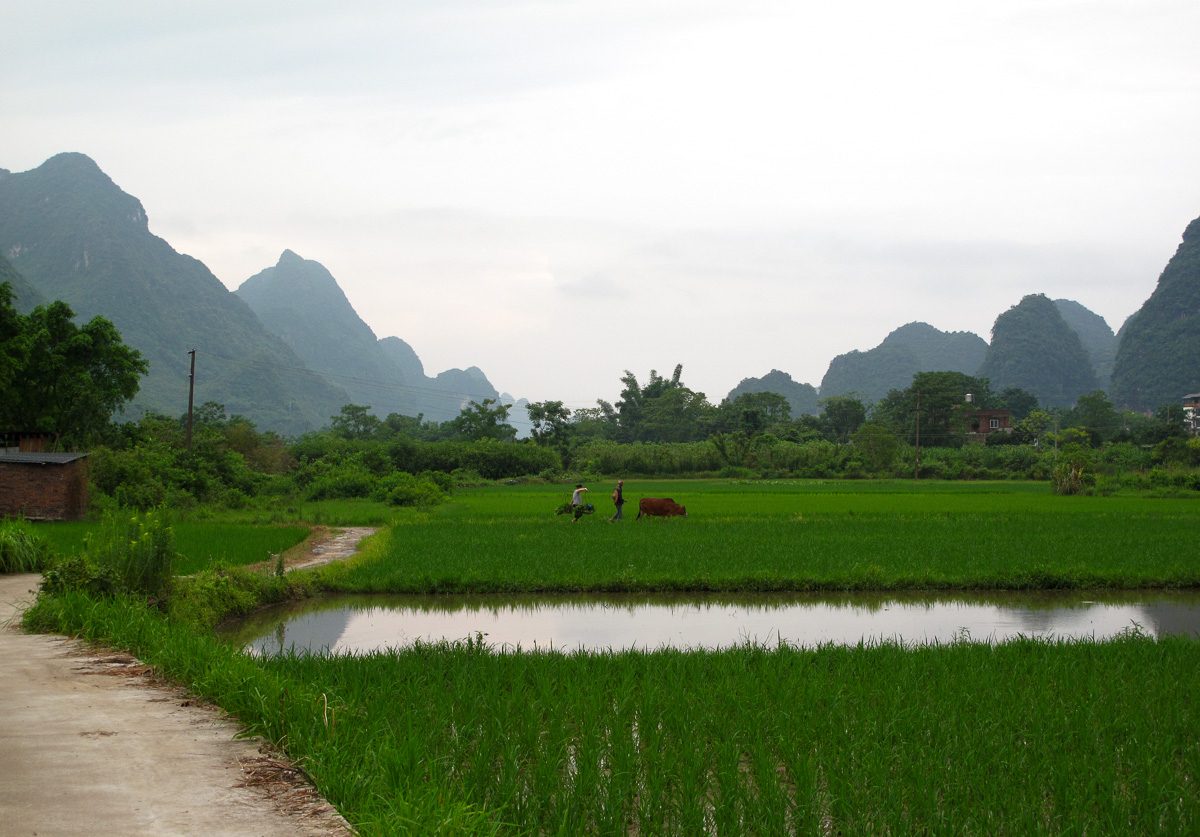
Day 3 — Raft in the morning, bicycle after
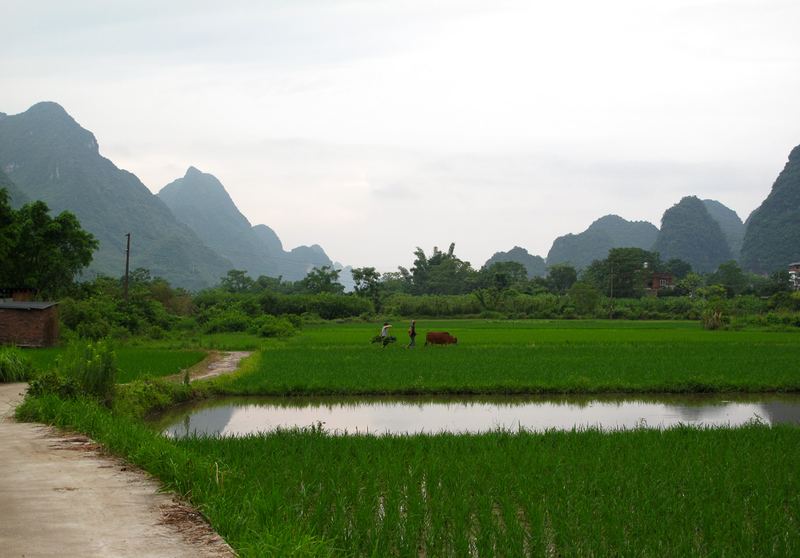
The Yulong River is the quieter tributary, and a raft for two costs ¥150–250 depending on the stretch and the season. The rafts are punted rather than driven, the water is shallow enough to see the bottom, and the route passes water buffalo and rice fields with the karst closing in on both sides. Book at the jetty or through your guesthouse the evening before.
Then rent a bicycle or an electric scooter, ¥30–80 for the day, and ride the loop that links the Yulong bridges: about 20 km on flat lanes through villages, with Moon Hill, ¥15 to climb the 800 steps to the arch, roughly in the middle. Guesthouses along the route serve lunch for ¥40–70 and will refill your water free.
Note where the station is before you plan the last afternoon. Yangshuo’s high-speed station sits at Xingping, 27 km from town, with a shuttle at about ¥20 or a taxi at ¥100. If your train leaves in the evening, ride towards Xingping in the afternoon and look at the river bend there, which is the view printed on the twenty-yuan note.
The three days in numbers
Key facts
- Li River cruise
- ¥210 – ¥270 standard, ¥360 – ¥460 upper deck
- Yulong bamboo raft
- ¥150 – ¥250 for two, 60–90 minutes
- Bicycle or e-scooter hire
- ¥30 – ¥80 per day
- Guesthouse in the villages
- ¥200 – ¥400 per night
- Longji rice terraces, if added
- ¥80 entry plus transport
- Eating, per day
- ¥100 – ¥200
Three days on this pattern costs about ¥2,000 per person including the cruise and two nights in a village guesthouse, or ¥1,300 if you take the bus instead of the boat. That bus is the wrong saving: the river is the reason you came, and the road runs behind the hills the whole way.
Where this trip goes wrong
- Taking the train to Yangshuo station and assuming you have arrived. The station is at Xingping, 27 km from town, and the last shuttle leaves in the early evening.
- Booking a cruise that returns to Guilin the same day. You would sail the best four hours of scenery and then spend two hours on a bus back past it.
- Riding the Yulong loop between 11:00 and 15:00 in summer. There is no shade on the lanes and the karst holds the heat.
- Adding Longji as a half-day. It is 2.5 hours each way on mountain roads and the terraces are best at sunrise.
Questions people actually ask
Is the Li River cruise worth the price?
It is the one thing here that nothing else replicates, and the four hours pass quickly. The standard fare at ¥210–270 buys the same scenery as the upper deck; the difference is comfort and a better platform for photographs.
Can I skip Guilin city entirely?
Yes, and many people do. Trains and flights arrive there, but if your schedule allows, go straight to Yangshuo and give the extra day to the villages or the rice terraces.
Where should I stay in Yangshuo?
In one of the Yulong villages rather than the town, at ¥200–400 a night. You get the quiet morning light, the raft jetties within walking distance, and a 15-minute ride into town for dinner.
Cruise departures are fixed by the river levels and the Longji terraces change with the planting calendar; the fares below were reconciled with the operators in mid-September 2026.