Paying In China: What Actually Works At The Counter
Cash has mostly stopped being useful here. Cards work now, but not everywhere, and not always the way you expect. Here’s what to set up before you land, and what to do when a payment fails.
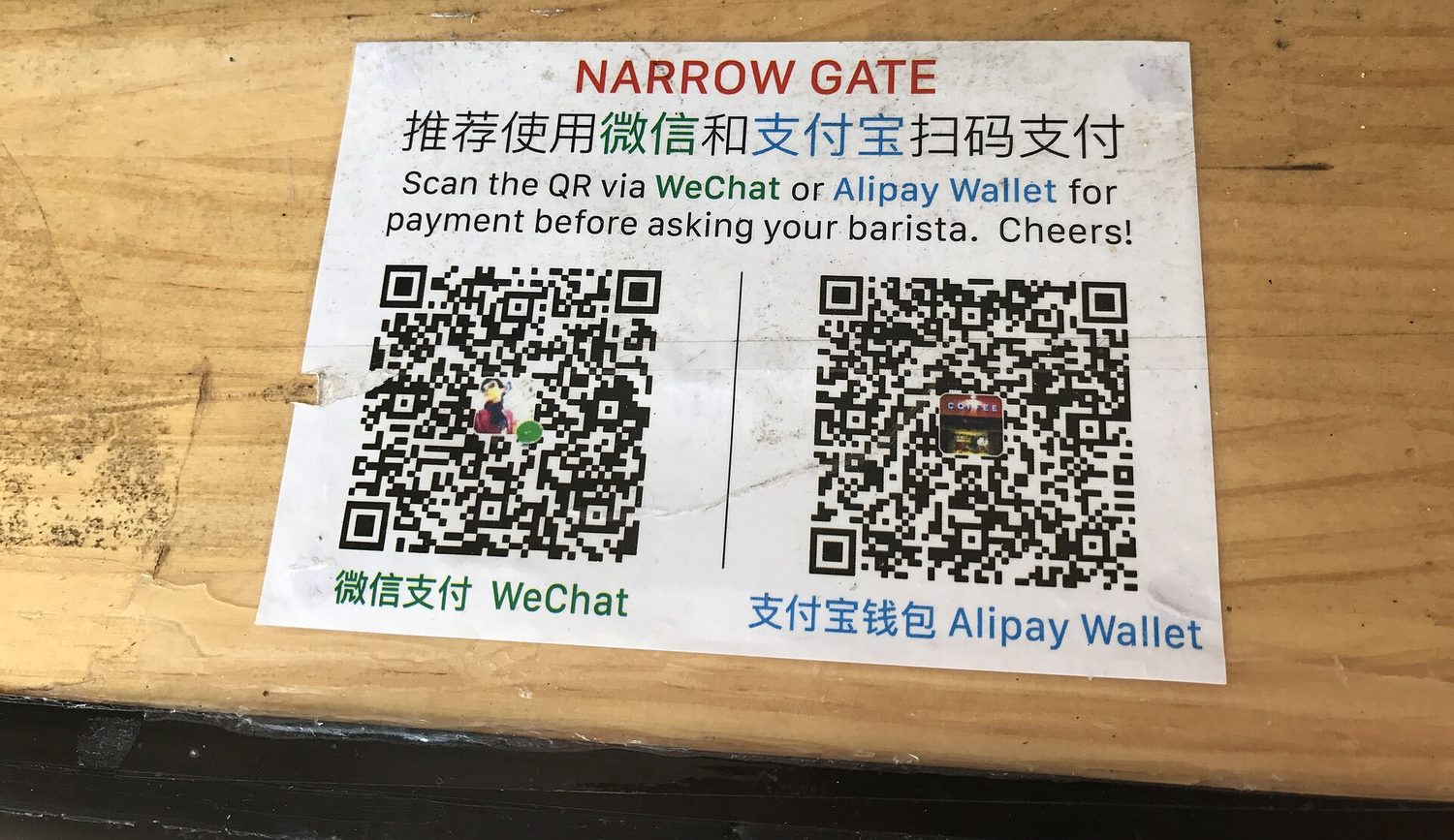
You’ll scan QR codes for most of what you buy in China. That includes breakfast buns, subway tickets, temple entry fees, and the roadside woman selling you a bag of loquats. "Do you take card?" is a question that barely has an answer here — the answer is yes, everywhere, but through a QR code on your phone rather than a plastic card.
The good news is that this stopped being a foreign-visitor problem in 2023, when both major wallet apps opened up to international Visa and Mastercard holders. You can now bind your home card and pay almost anywhere. The less good news is that the setup takes about fifteen minutes, needs to happen while you still have stable Wi-Fi, and occasionally fails for reasons nobody will explain to you. Do it the night before you fly, not in the arrivals hall.
Set up one wallet before you leave
Install Alipay and WeChat Pay before landing. Both need a phone number, and being able to receive SMS matters — the registration code arrives by text. If your home SIM is already set up for roaming, use it for that first verification rather than trying to do everything over airport Wi-Fi at once.
- Download the app and register using your home mobile number, with the correct country code selected.
- Add your Visa or Mastercard. Tap the card icon, then scan your card or key in the number, expiry date and CVV.
- Wait for the identity check. Most first-time foreign card bindings clear in a few minutes, but allow up to 24 hours if it asks for a passport photo.
- Test it before you need it. Buy something tiny — a ¥3 bottle of water is ideal — so you discover any problems while it still doesn’t matter.
What it costs you
Small payments are free. Once you pass roughly ¥200, providers typically take a service fee around 3%, which lands on you rather than the merchant. Below that threshold there is usually nothing added. Card issuers may also charge their own foreign transaction fee; that depends entirely on your bank, so check your own terms rather than assuming.
Practically speaking, this changes how you should pay. Buying a ¥4,000 camera on a wallet app is an expensive way to spend money. A ¥400 dinner isn’t. For anything large — a tour booking, a long-haul onward ticket, a hotel bill for a full week — use a real card at the front desk and skip the QR screen.
| Situation | Best option | Expect |
|---|---|---|
| Street food, taxis, convenience stores | Alipay or WeChat Pay | No added fee |
| Restaurants under ¥200 | Either wallet | No added fee |
| Supermarket run at ¥600 | Either wallet | Roughly 3% service fee |
| Hotel bill for a week | Physical card at reception | Your bank's own FX rate |
| Remote village guesthouse | Cash | No other option works |
Where your wallet suddenly stops working
Most failures fall into three buckets, and none of them are your fault. The merchant's QR is personal rather than business-registered, so it only accepts transfers from another Chinese wallet. Your issuer has flagged a payment it considers unusual. Or you have hit a per-transaction ceiling.
Per-transaction and daily caps exist on most foreign card bindings, and they aren’t always published clearly. If you are paying for a group dinner and it fails, the fix is nearly always to split into two payments rather than to try a different app.
Cash, and how little of it you need
You might go several days without touching cash in Shanghai or Shenzhen. Conversely, in a county town in Guizhou, a folded ¥20 note is worth more than a phone full of apps. Bring maybe ¥500 to start, then top up at a bank ATM. Airport exchange counters exist and their rates are poor — take out cash rather than changing notes there.
ATM access is straightforward. Most machines take Visa and Mastercard, though a few only read UnionPay. Bank of China branches are the most reliable place to try if one machine refuses you. Withdrawals attract both the ATM operator's fee and your bank's; taking ¥1,000 once is cheaper than taking ¥200 five times.
A realistic first-day plan
Land, get onto the airport Wi-Fi, and finish the wallet registration while you still have your home SIM receiving texts. Buy a bottle of water at the airport shop to confirm the whole loop works. Then pick up cash from an ATM landside, before you leave the terminal.
One thing worth doing that most guides skip: write your name exactly as it appears on your passport when prompted. Mismatches between your registration name and your card name are the single most common reason a foreign card binding gets rejected, and the fix usually means waiting another day.
Questions people actually ask
Can I get by with just a credit card and no wallet app?
Honestly, it depends where you go. In Shanghai, Beijing and Shenzhen you can survive — UnionPay contactless readers and hotel card terminals are everywhere. But plenty of everyday transactions have no card path at all: street stalls, small family restaurants, some taxi ranks, most subway ticket machines outside the big six cities. Skipping the wallet apps means you’ll be asking someone else to pay for you more often than you’ll enjoy.
Do I need a Chinese bank account?
No. You would need a local phone number, a residence address and usually several hours in a branch, none of which is worth it for a two-week trip. Your home card bound to a wallet covers essentially everything a visitor needs.
What happens if my payment fails in front of a queue of people?
Nothing bad, culturally speaking. Nobody is judging you — card problems are part of daily life here too. Step aside, switch to the other wallet, and if that fails, hand over cash. Have the cash accessible rather than buried in your suitcase, and this becomes a ten-second problem instead of a ten-minute one.
Payment rules change quietly and often. Figures below were checked against published provider terms in September 2026; confirm current terms in the app before relying on them for a large purchase.