Shanghai Pudong To Central Shanghai: Maglev, Metro Or Taxi
Thirty kilometres, four viable options, and a ¥50 ride that hits 300 km/h end to end. Here is which one to take.
Pudong is thirty kilometres east of everything you want to see, and it is the nicest airport problem in China because all four solutions actually work. The Maglev crosses the gap in eight minutes at cruising speed; Line 2 takes the same journey door-to-door for the price of a coffee; a Didi takes forty minutes when the road is clear and twice that when it isn’t. The right answer depends almost entirely on where in Shanghai you are staying.,Start by looking at your hotel district rather than the clock. Staying near People’s Square, the Bund or Jing’an means Line 2 or Line 10 do it directly. Staying east, near Lujiazui or the Expo site, means the Maglev plus one short transfer is quicker than any road alternative. Anyone heading northwest to Hongqiao should treat the transfer carefully — it is a long cross-city leg in itself.
| Method | Elapsed time | Cost | Difficulty |
|---|---|---|---|
| Maglev + metro | 25–35 min | ¥50–60 | One transfer at Longyang Road |
| Metro Line 2 | 65–80 min | ¥6–8 | No transfer if you are near Nanjing Road |
| Didi / taxi | 40–90 min | ¥150–200 | None, but rely on the driver’s route |
| Airport bus | 60–90 min | ¥20–30 | Several lines, Chinese-only announcements |
Maglev: the eight-minute answer
The Shanghai Maglev is famous as a stunt and genuinely useful as transport. It runs from Pudong Terminal 1 and 2 to Longyang Road, takes about eight minutes, and touches roughly 300 km/h on the clear stretches. You pay ¥50 for a single or ¥80 for a return booked within seven days, then transfer to Line 7 or Line 2 at Longyang Road for the last leg.,Two things people get wrong. First, the train does not go into central Shanghai — it stops at Longyang Road, which is still twenty minutes by metro from the Bund, so the headline eight minutes becomes about half an hour door-to-door. Second, there are gaps in the timetable; check departures before planning around a specific one, because waiting twenty minutes for the fastest train in town rather defeats the point.
Metro Line 2: boring, and often best
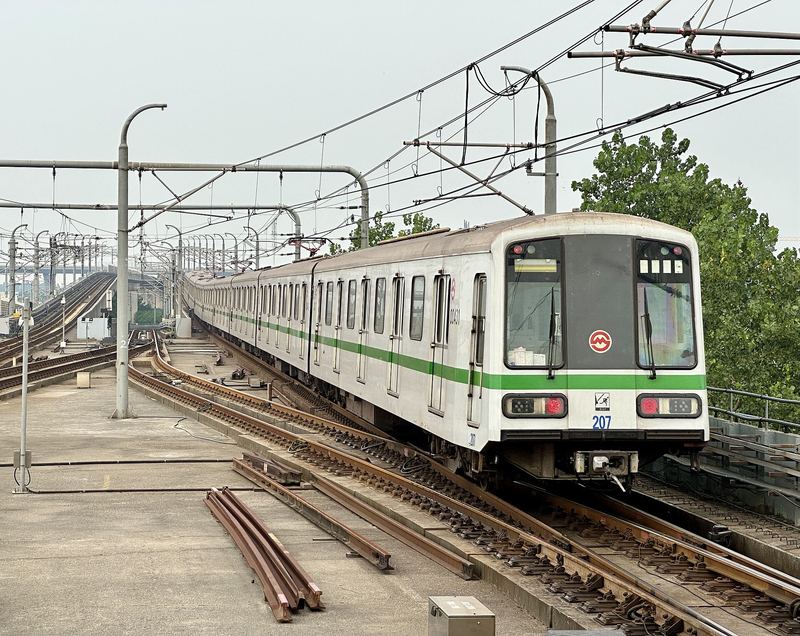
Line 2 runs straight from Pudong through the middle of everything: Nanjing East Road sits about seventy minutes away and People’s Square a few minutes beyond. There is no transfer, no road, no negotiation and never a queue that isn’t moving. If your hotel is within a few hundred metres of the Nanjing Road, People’s Square or Jing’an stations, take Line 2 and stop thinking about it.,Buy your ticket from the machine with notes or use the QR pass inside whichever wallet app you set up on the plane. Adding a Didi for the final few hundred metres is fine; replacing the whole metro leg with a car only makes sense with the sort of luggage that would not fit down an escalator.
Taxi and app cars
A taxi from Pudong to the centre costs roughly ¥150–200 and takes forty minutes with a clear road. That window is narrow: the elevated expressway between the airport and the inner ring carries everything going into and out of the financial district, and the same trip at 18:00 on a Friday can be double. Late at night the pattern inverts — after the last metro services the road empties and a car becomes both quick and affordable.,Use the signed rank or a Didi pickup point and ignore the drivers who approach you inside the terminal. Their quotes are higher than the metre, sometimes by three times, and the journey is identical. If you arrive at Terminal 2 and the taxi queue looks forty people deep, taking the Maglev to a better-connected district and hailing there is often quicker overall.
Key facts
- Distance to city centre
- 30–35 km
- Terminals served
- Terminal 1 and Terminal 2, both connected to Line 2 and the Maglev
- Maglev operating line
- Pudong Terminal 1/2 — Longyang Road only
- Change at Longyang Road
- Line 2 westbound for Nanjing Road and People’s Square
- Last metro services
- Around 22:30–23:00 depending on the line
What I would do
With a normal suitcase and a hotel near People’s Square, Line 2 every time. If I land with two hours of daylight and an appetite for the novelty, Maglev once for the experience and Line 2 thereafter. With three people and a pile of luggage late in the evening, one Didi for the whole party costs barely more than individual metro fares and saves twenty minutes of escalators on both ends.
Questions people actually ask
Is the Maglev faster than a taxi into the centre?
To Longyang Road, yes, always. To the centre, it depends where you are going: with one transfer it usually beats a car in the daytime and loses to nothing except a very late arrival.
How much is a taxi from Pudong to the Bund?
Typically ¥150–200 including the tolls, for a forty-minute run in clear traffic. Evening and rush-hour journeys take considerably longer.
Can I pay for the airport transport by card?
Metro machines accept notes and increasingly contactless cards; the Maglev ticket office takes familiar payment methods; taxis prefer QR payments or cash. Assume QR is the default.
How do I get from Pudong to Hongqiao?
Treat it as a separate trip. There are direct airport buses and a metro link, but the journey is long; allow two and a half hours or more.
Is there a left luggage desk at Pudong?
Yes, in both terminals, and it solves a common problem: storing bags for a same-day onward connection so you do not carry them onto the Maglev.
Times and fares below are the ordinary daytime picture; check before relying on them. Taxi prices assume no serious queues on the elevated road.