Eating In China When You Read Nothing On The Menu
Regional food, untranslated menus, and the small habits that turn a confusing dinner into the best meal of the trip.
The restaurant cannot speak your language and you cannot read the menu. That is the whole problem, and it has three easy fixes that Chinese travellers abroad use in reverse: point at your neighbour’s table, photograph the dishes you recognise as a curry if the trouble persists, and order one famous dish by its picture rather than trying to construct a meal from scratch.
What makes this worth solving is the gap between what food costs and what it is. A bowl of hand-pulled noodles in Xi’an costs about as much as a coffee in London and is better than anything you can buy in most European Chinatowns. The places doing it do not have English menus, because they do not need them.
What the menu actually looks like
Big-city restaurants often have a photographic menu near the door or a QR code table order that switches to English. In small places the menu is a single laminated sheet of characters, sometimes a wall board, sometimes nothing at all — you order at the counter from what is on the steel trays. In all three cases the useful move is the same: look at what has arrived on tables around you.
Ordering by picture works because most restaurants in tourist cities keep one picture menu; ordering by pointing works because the kitchen will bring whatever is being plated most often. The failure mode is trying to translate character by character with an app in a dark room while your patience runs out. If you must use the app, translate the section headers — noodles, rice, pork, vegetables — and then pick by price.
Regional, briefly
| Region | Order this | Typical spend per person |
|---|---|---|
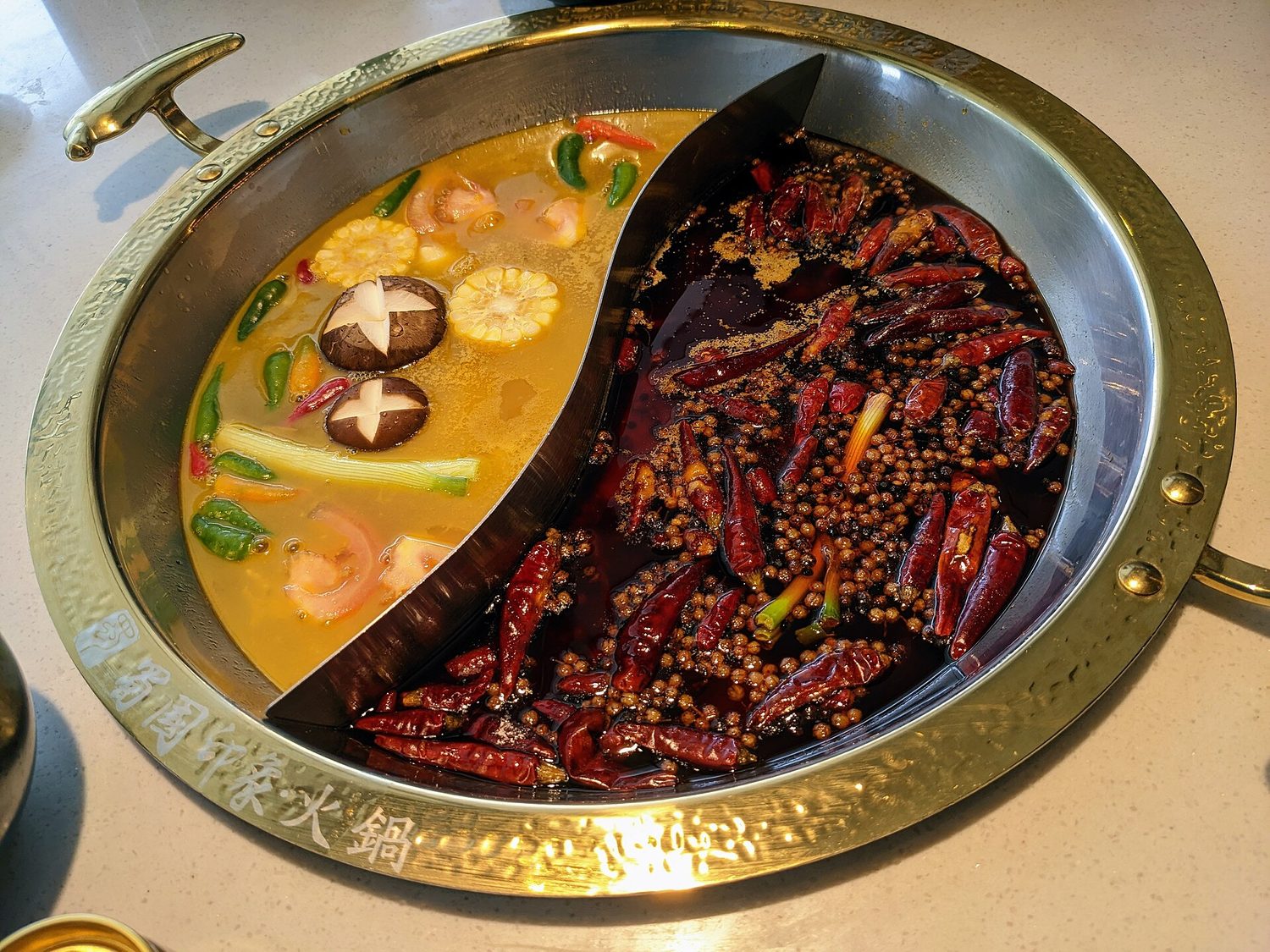
| Chengdu / Sichuan | Hotpot, mapo tofu, dan dan noodles, twice-cooked pork | ¥50–90 |
| Xi’an | Hand-pulled biang biang noodles, roujiamo, lamb skewers | ¥20–45 |
| Shanghai | Soup dumplings, braised pork belly, scallion oil noodles | ¥45–90 |
| Guangzhou / south | Dim sum, roast goose, congee | ¥30–80 |
| Beijing | Peking duck, zhajiangmian, mutton hotpot in winter | ¥50–120 |
Chilli is the other thing worth knowing before you sit down. In Sichuan it arrives as a numbing, aromatic heat that most people learn to like within two meals; "wei la" gets you mild, and "bu la" gets you none at all — useful phrases, and pointing at the dish then waggling a finger works too. Ask before assuming: the same restaurant serves Sichuan employees their local food and serves visitors a tempered version unless you say otherwise.
How the meal is structured
There are no courses. Dishes arrive as the kitchen finishes them, in whatever order, which means your rice comes with the first thing and your soup arrives last. Nobody thinks this odd; it is why Chinese tables are round, why everyone eats from shared plates in the middle, and why "one dish per person plus one" is the standard order rather than a personal plate each.
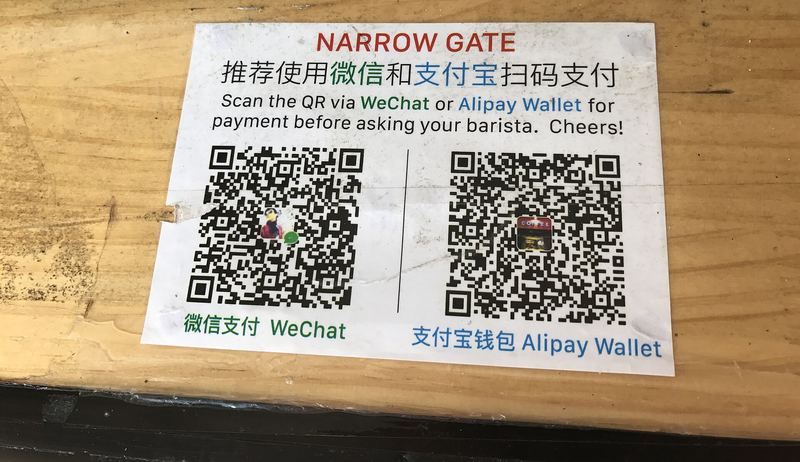
Tea appears unbidden and is sometimes charged, sometimes not; hot water arrives instead of iced water, which shocks people in July. There is no tipping. The bill is brought when you ask for it — a raised hand and the word "maidan" — and paying by QR code at the table is more common than paying at the counter.
Key facts
- Shared plates
- Standard, and chopsticks for serving usually sit alongside
- Tap water
- Not served — every table gets tea or bottled water
- Tipping
- Not expected in ordinary restaurants
- Dietary needs
- Vegetarian is understood; vegan is not — say "no meat, no egg, no dairy" explicitly
- Allergies
- Carry the written Chinese for yours; verbally it will not survive the kitchen
The things people get wrong
First, assuming the empty restaurant is bad. Turnover is everything in China; a place with nobody in it at 12:30 is either new or closed in a month. Second, avoiding the dish that arrives unexpectedly — it is often a free side, a small taste of the house, or something the kitchen wants you to try, and the polite response is to taste it. Third, expecting breakfast to be the hotel buffet: it is noodles, dumplings, congee and steamed buns on the street, for about ¥10, and it is the best value meal of any day.
Questions people actually ask
Do I need to book restaurants?
Almost never for casual places. Only high-end restaurants and weekend dim sum rooms need a table held, and hotel staff can do that by phone in Chinese for you.
Is street food safe?
Follow turnover: a stall cooking to order in front of a queue is safer than a quiet one with pre-cooked food sitting out. That rule has served me better than any list.
What do I do about the bones?
Put them on the table, on the paper, or in the bowl provided. There is usually a small plate or a gap on the tablecloth; a pile of bones and shells next to your setting is normal, not rude.
How much should a normal dinner cost?
¥30–60 per person in a casual restaurant, ¥120–200 for two at hotpot, ¥80–150 at a mid-range regional table. Anything above that in a small city means you have walked into a banquet-oriented room.
Can I pay by card?
QR payment is universal and card acceptance is patchy outside hotels and chains. Set up a wallet app before you arrive and assume cash and card are the backup.
Prices are typical 2026 street and casual restaurant bands for Chengdu, Xi’an and Shanghai. Regional menus reprint with photographs often enough that exact figures drift.