The Great Wall: Badaling, Mutianyu Or Jinshanling?
All three are the same wall and completely different days out. Here is how each one actually goes, with the numbers that separate them.
The wall was never one thing and it is not one attraction. Ask for directions to it in Beijing and you will get three different answers depending on who is answering, because there are dozens of accessible sections within a day’s reach and they share maybe nothing except the name. Three of them matter for a visitor: Badaling, Mutianyu and Jinshanling.
The choice is easier than it looks. Badaling is the closest and the busiest, repaired to a wide stone parapet with handrails and a cable car, which is exactly what you want if you are travelling with someone who cannot manage steep steps. Mutianyu is the default answer for most people — an hour further away, better scenery, significantly thinner crowds. Jinshanling is the one for photographers and second visits: restored and wild sections alternating along a ridge, with nobody much on it at all.
The three, side by side
| Section | Travel from Beijing | Entry | Crowds | Who it suits |
|---|---|---|---|---|
| Badaling | ≈ 1h15 by suburban rail | ≈ ¥40 plus ¥40 return for the cable car | Heavy, all year | First visits with limited mobility, tight schedules |
| Mutianyu | ≈ 2h by car or tour bus | ≈ ¥45 entry, ≈ ¥120 round trip with shuttle and chairlift | Moderate, busy at weekends | Most first-time visitors |
| Jinshanling | ≈ 2h30 by road | ≈ ¥65 entry | Light even in summer | Photographers, repeat visitors, walkers |
Badaling: the easy one, honestly
Badaling gets a bad press from people who have been to Jinshanling. What it gets right is access: the suburban rail line from Qinghe or Huangtudian puts you near the entrance without touching a road, the restored section is wide and the steps are regular, and there is a full complement of handrails. If staircases are the limiting factor in your group, this is the only one of the three I would plan around.
What it gets wrong is everything else. At 10:00 on a Saturday in summer the wall itself is a slow-moving queue of people taking turns at the same viewpoints, and the approach is lined with the sort of souvenir shops that follow a coach park. Arrive on the first trains out of the city and the balance flips: you get twenty minutes on the wall with almost nobody else on it, and by the time the crowds arrive you are back on the train.
Mutianyu: the right answer for most people
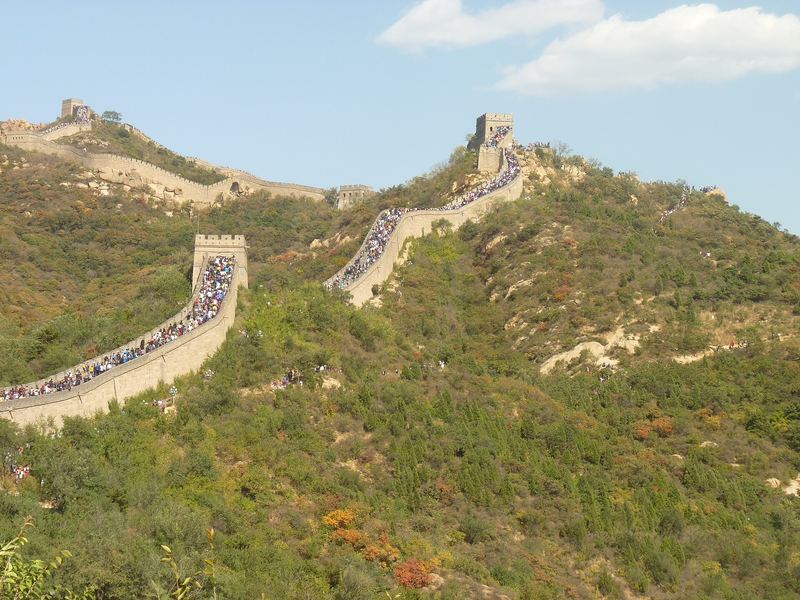
Mutianyu sits in forested hills, it is restored rather than rebuilt, and the crowd spreads out because the restored stretch is long and branches in two directions from the cable car station. Most visitors go left towards the higher towers, which means going right buys you a quiet hour. The wall here also has the famous steep sections — genuinely hard work in the heat, with stunning rewards at the top.
Getting in involves a shuttle bus from the car park to the base and then a chairlift or cable car up, or your legs if you prefer them. The toboggan down is touristy and also the most fun you will have all day; take it if the queue is short. Practical note: bookings for tour buses from Beijing are easy and cheap, but the "package" often includes an unscheduled jade factory stop. A private car costs more and does not.
Jinshanling: the one to save for later
At 2h30 by road, Jinshanling rewards people who already know what the wall feels like. Restored stretches alternate with crumbling ones, the ridge walks for kilometres with no barrier and no crowd, and sunset over both is the photograph everyone has seen without knowing the name of. It is also physically the most demanding: long distances between access points, little shade, and no shops once you are on the ridge.
Key facts
- Best months
- Late April–June and September–October
- Avoid if possible
- The first week of May and the National Day week in early October
- Bring
- Water, sun hat, and shoes with grip — smooth restored stone is slippery when wet
- Toilets
- At every base area, almost none on the wall itself
- If it rains
- Go anyway: the mist is the shot, but turn back at the steep descents
What I would actually do
One wall day, on a first trip: Mutianyu, leaving Beijing before 07:30, walking right instead of left at the top, toboggan down if the line is under ten minutes. Two wall days, or a second trip: Jinshanling for the afternoon light, staying out until the sun drops behind the ridge. Badaling only if someone in your group needs it to be the easy one — and even then, catch the earliest train.
Questions people actually ask
How far in advance do I need to book?
Entries carry daily caps at the popular sections and sell out during holiday weeks. In normal months, buying online the night before is fine; during May and October, book several days ahead.
Do I need a tour?
No. Public transport reaches Badaling directly, and Mutianyu is reachable by express bus from the city. Tours buy you simplicity and sometimes cost crowd timing and an unwanted shopping stop.
How much walking is actually involved?
Badaling can be a short loop. Mutianyu involves steep sections between towers. Jinshanling is a genuine hike of several kilometres if you walk the ridge. Plan shoes accordingly — this is not a city-walking day.
Can I visit in winter?
Yes, and it is beautiful, with far fewer people. Temperatures on the ridge run several degrees below Beijing and the wind is real: gloves are worth packing, and ice patches on restored stone need care.
Is the wall visible from central Beijing?
No. Every accessible restored section is 60–150 km from the centre. Anything advertised as the wall inside the city is a different, later structure — worth seeing, but not the same thing.
Entry fees and shuttle charges below are the usual 2026 bands. Repaired parks reprice every few years and holiday surcharges exist — verify against the official park notice before spending money.