3 Days in Beijing: The Order That Saves You Half A Day
Beijing spreads in three directions and the traffic between them is the enemy. Split the days by compass bearing and the city becomes walkable.
Most first visits to Beijing fail the same way. The list of sights is usually fine — it’s the sequence that lets people down. The Great Wall is 70 km north-east, the Temple of Heaven is in the south, the Summer Palace is in the north-west and the Forbidden City sits in the middle, so a plan built by importance rather than location puts you in a taxi for two hours a day.
This three-day version groups the city by direction instead. Day one walks the central axis on foot from Tian’anmen north to Jingshan. Day two goes out to the Wall and comes back to the north-east. Day three covers the southern park and the museum district, ending near Wangfujing where the metro lines meet.
The three days at a glance
| Day | Morning | Afternoon | Evening | Tickets |
|---|---|---|---|---|
| 1 — Central axis | Tian’anmen Square, 07:30; Forbidden City from 08:30 | Exit at Shenwumen, climb Jingshan | Shichahai and the hutongs | ¥62 |
| 2 — Great Wall | Leave at 07:00 for Mutianyu | Back in town by 15:00, Lama Temple or 798 | Peking duck dinner | ¥165 with cable car |
| 3 — South and centre | Temple of Heaven from 06:30 | Qianmen, Dashilan, National Museum | Wangfujing and the metro | ¥34 |
Total tickets come to about ¥260 for three days, but the number that matters is walking distance. Day one is 8 km on foot and almost all of it is flat. Day two involves a cable car and about 4 km along the parapet. Day three is closer to 6 km with two metro hops in the middle.
Day 1 — Tian’anmen to Jingshan, all on foot
Start at Tian’anmen Square at 07:30. Entry to the square is free but requires a passport-linked reservation made up to seven days ahead, and the security queue doubles after 09:00 when the tour coaches arrive. Walk the length of it, look at the flagpole and the Monument to the People’s Heroes, and be at the Meridian Gate of the palace by 08:15.
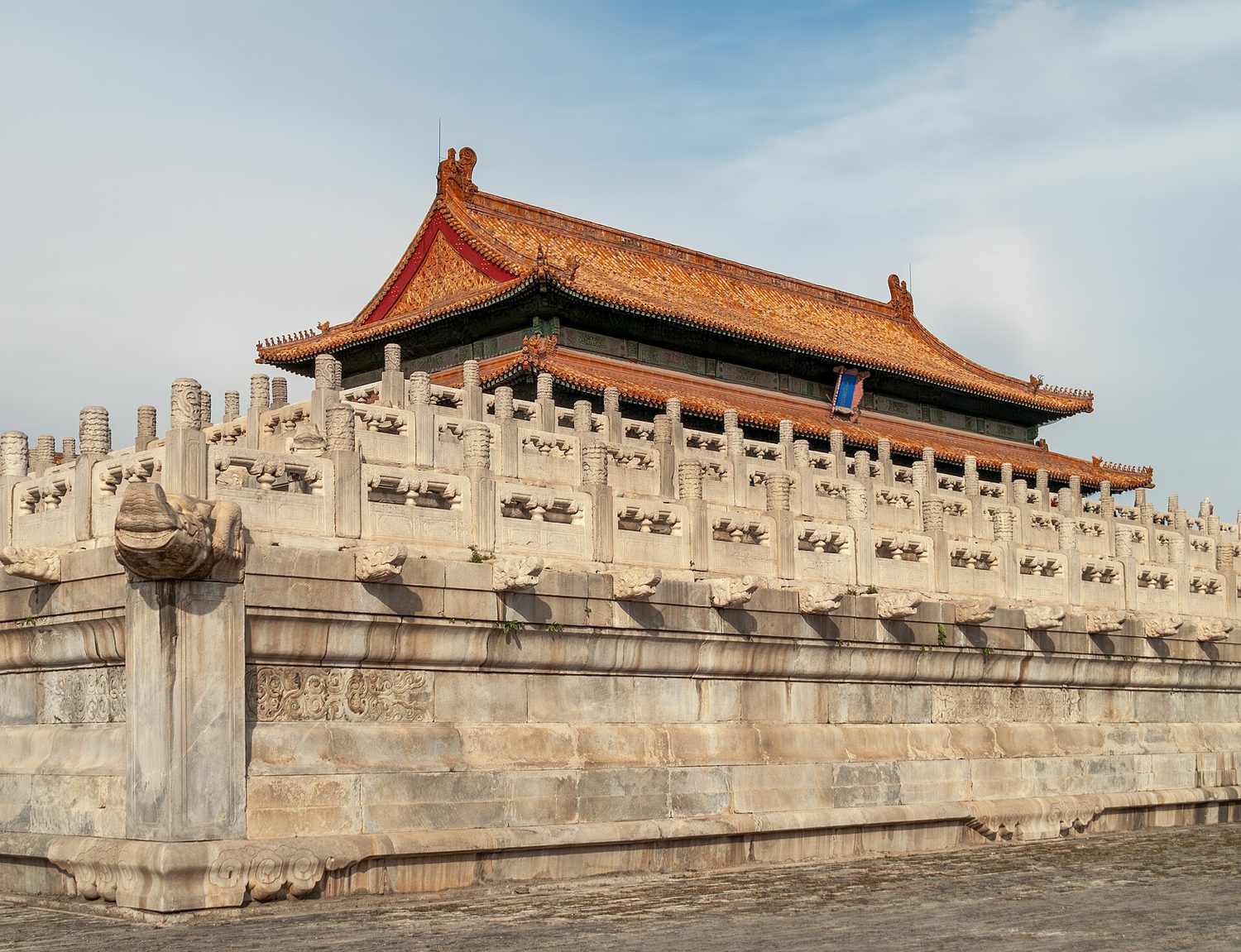
The Forbidden City is ¥60 from April to October and ¥40 in the colder months, and it releases its daily allocation exactly seven days ahead at 20:00 on the official mini-program. It closes on Mondays except during national holidays. Once inside you want three hours on the central axis — the three great halls, the imperial garden — plus another hour for the eastern halls of the six palaces, which are quieter and often better.
Leave by the north gate, cross the road and pay ¥2 to enter Jingshan Park. The climb to the Wanchun Pavilion takes fifteen minutes and puts you above the palace roofs with the whole golden sweep of them laid out below. This is the photograph everyone brings home, and it costs less than a bottle of water.
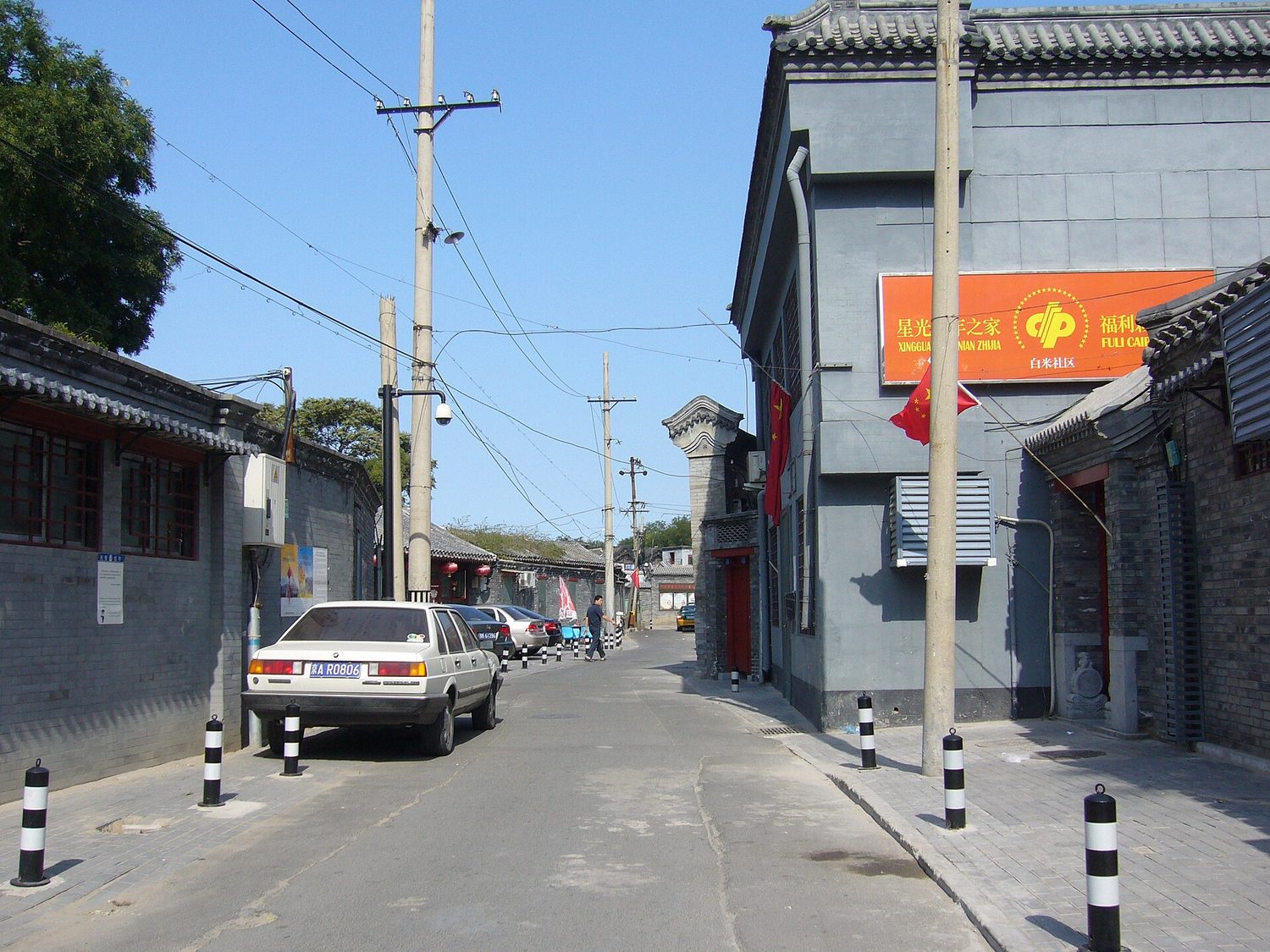
From the north gate of Jingshan you are ten minutes from Shichahai, the lake district, where the hutongs run between courtyard walls and bicycles outnumber cars. Dinner here is noodles and lamb skewers at ¥40–80, or dumplings in a converted courtyard for ¥100 for two.
Day 2 — The Wall, and picking your section
Two sections cover almost everyone. Mutianyu, 70 km north-east, is ¥45 to enter on top of a cable car at ¥120 return or a chairlift-and-toboggan pair at about ¥100; it is restored, less crowded and has 20 watchtowers along a two-hour ridge walk. Badaling is ¥40 and reachable on the 877 bus from Deshengmen for ¥12 in about an hour, which is exactly why it is the busiest attraction in the country on a holiday weekend.
For Mutianyu, leave Dongzhimen at 07:00. Bus 916 Express to Huairou North Street costs about ¥15 and takes 90 minutes, then a local h3x minibus or a ¥30 shared taxi covers the last 20 km. A private car booked the night before is ¥450–600 for the return trip and removes all the guesswork; split four ways it is the best value on the itinerary.
Walk the ridge towards tower 20 — the section where the parapet climbs almost vertically for the last stretch — then come down by cable car. Allow three hours on the wall and be back in the city by 15:00, which leaves the late afternoon free. The Lama Temple at ¥25 and the 798 art district at no charge are both in the north-east and on the way home.
Day 3 — Temple of Heaven at dawn, then the south
The park opens at 06:00 and the ticket office sells a ¥34 combined ticket that includes the Hall of Prayer for Good Harvests. Come early and you get the park as the city uses it: groups singing in the shade, old men doing tai chi under the cypresses, people practising shuttlecock kicking. The same buildings at 11:00 are a queue.
Take the metro two stops north to Qianmen and walk Dashilan, the restored shopping lane, where the snack shops are touristy but the side alleys still hold apothecaries and cloth shops. Lunch is zhajiangmian noodles at ¥25–35. In the afternoon the National Museum on the east side of Tian’anmen Square is free with a timed reservation and holds 1.4 million objects, and it closes Mondays.
Finish at Wangfujing, where lines 1 and 8 cross. The food street is a novelty rather than a meal; the more useful fact is that this is where you can get a late bowl of noodles before heading back to a hotel anywhere on the network.
Book these before you fly
- Palace Museum (Forbidden City): seven days ahead at 20:00, passport number required per visitor.
- Tian’anmen Square: separate free reservation, also passport-linked, released seven days ahead.
- National Museum: free timed slot, one week ahead, closed Mondays.
- Rail tickets out of Beijing: 15-day window, and they go quickly before the October holiday.
- Mutianyu private car: booking the evening before costs ¥50–100 less than on the morning.
What the three days cost
Key facts
- Admission, all three days
- ¥141 – ¥185 per person
- Metro and buses
- ¥10 – ¥20 per day
- Hotel, mid-range central
- ¥400 – ¥800 per night
- Food per day
- ¥150 – ¥300
- Mutianyu car, shared
- ¥450 – ¥600 split between passengers
- Peking duck for two
- ¥300 – ¥600 with sides
A comfortable three-day total lands between ¥2,600 and ¥3,800 per person including a central hotel, or about ¥1,500 if you stay in a hostel and eat where students do. The single biggest saving is not the hotel but the transport: every option in this plan except the Wall day is served by a ¥3–6 metro ride.
Where people lose the day
- Trying to add the Summer Palace to day three. It is 15 km north-west of the Temple of Heaven and deserves its own half-day, ideally paired with Yuanmingyuan next door.
- Arriving at the Forbidden City without a reservation and hoping to buy at the gate. The ticket office has not sold walk-up tickets for years.
- Booking a hotel near Wangfujing for its address rather than its metro line. Line 1 and line 8 matter more than the street you are on.
- Doing the Wall on day one after a long flight. The 07:00 departure is unforgiving, and jet lag plus 4 km of uneven parapet is a bad combination.
Questions people actually ask
Is 3 days enough for Beijing?
Enough for the Forbidden City, the Wall, the Temple of Heaven and one neighbourhood properly. It is not enough for the Summer Palace as well, which is why many people take four. Three works if you accept that you are choosing four big things, not six.
Should I go to Mutianyu or Badaling?
Mutianyu for a first visit, unless you are on a tight budget or relying on public transport, in which case the ¥12 bus to Badaling is hard to beat. Mutianyu costs more to reach but has a fraction of the crowds and better walking.
How far ahead do Forbidden City tickets sell out?
The full daily allocation is released seven days ahead at 20:00 and weekends in spring and autumn are gone within minutes. Weekdays in winter often have space the day before. Book the moment the window opens.
Palace Museum release times and opening hours are set per season; the 7-day booking window and Monday closures below follow the September 2026 release schedule.