2 Days in Hangzhou: The Lake On Foot, The Temple At Dawn
West Lake is free and enormous, which is the whole difficulty. One day circles it slowly, one day leaves it for the temple and the tea hills.
Hangzhou is the most relaxed city on this site and also the one where people most often waste a day, because West Lake has no ticket gate and therefore no obvious way to start. The lake is 6 km across, ringed by causeways, temples and gardens, and the pleasure is in covering a third of it well rather than all of it badly.
The other half of Hangzhou is up in the hills behind the lake, where the tea terraces run for kilometres and the biggest temple in the region sits at the end of a bus route. Those two days do not overlap, which is why the plan below keeps them apart.
The shape of two days
| Day | Morning | Afternoon | Evening | Tickets |
|---|---|---|---|---|
| 1 — The lake | Broken Bridge at 06:30, Bai Causeway on foot | Boat to the island, Su Causeway by bicycle | Leifeng Pagoda for sunset | ¥95 plus boat |
| 2 — Hills and tea | Lingyin Temple and Feilai Peak from 07:30 | Longjing village for lunch and terraces | Hefang Street, then the lake fountain | ¥75 |
Getting around is cheap. The lakeside electric shuttle is ¥10 per section or about ¥40 for the full loop, bicycle hire from the shared apps is ¥1.5 per 15 minutes, and metro line 1 to Longxiangqiao puts you 200 metres from the eastern shore for ¥3–4.
Day 1 — Working the lake anticlockwise
Start at Broken Bridge before 07:00. It is the most photographed spot on the lake and after 09:00 it is a wall of selfie sticks, whereas at dawn it belongs to swimmers and people doing tai chi with the hills still under mist. Cross onto Bai Causeway and walk west for 40 minutes to the Su Causeway junction.
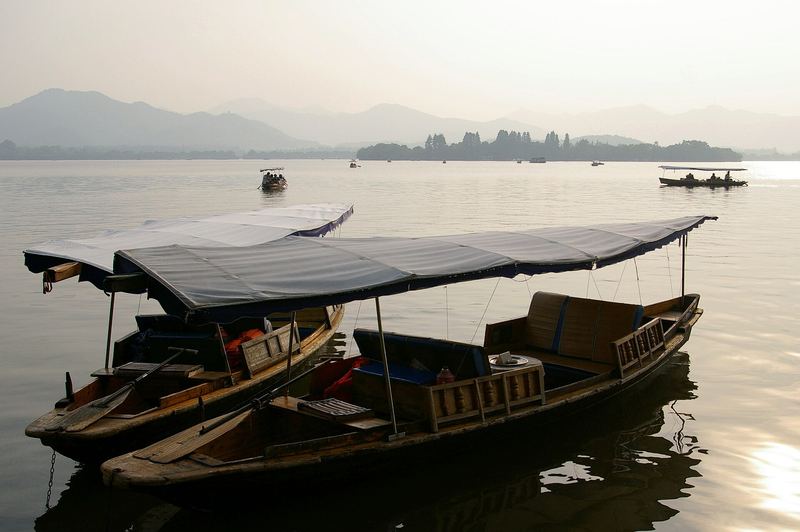
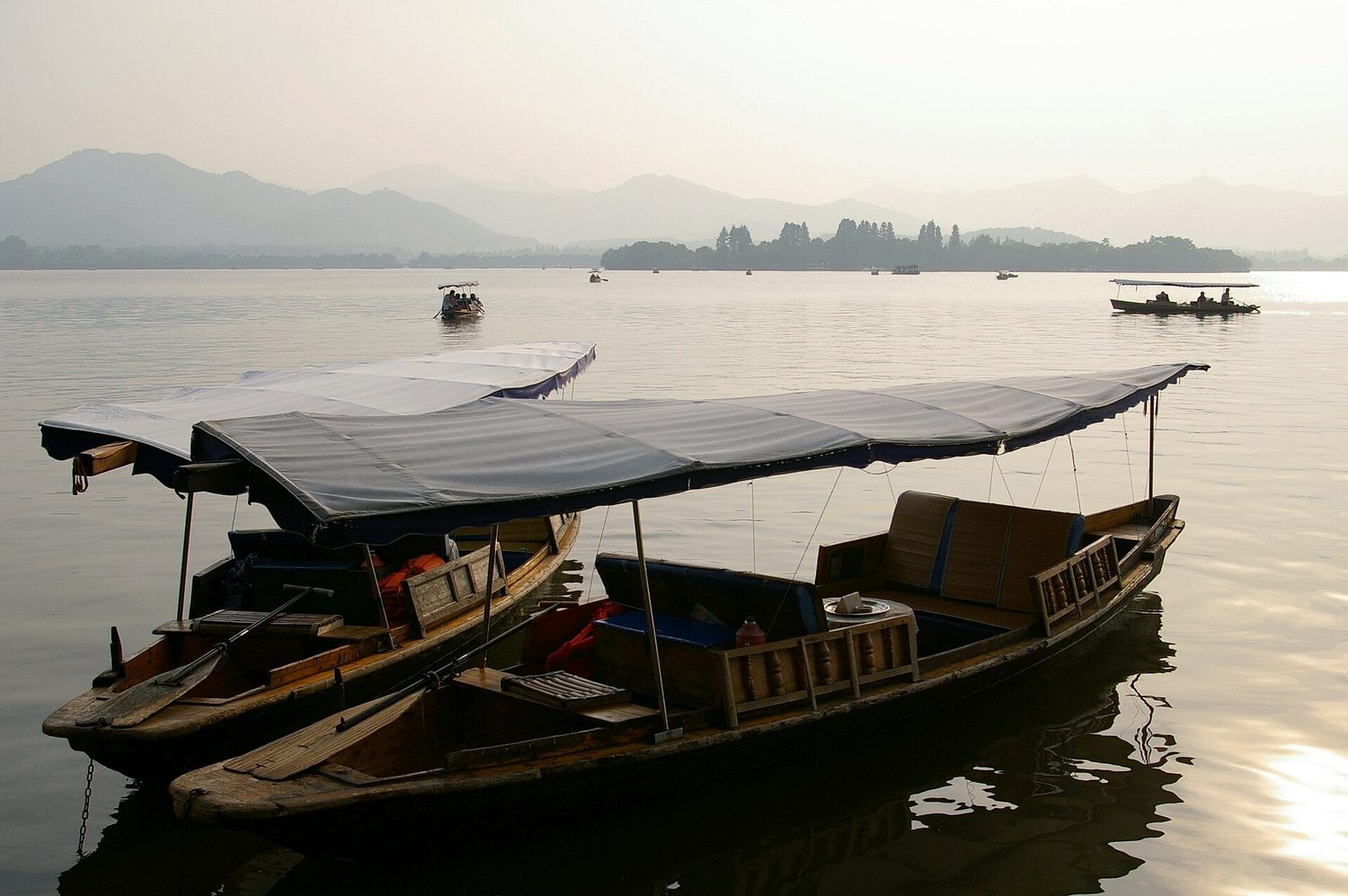
From the eastern shore, a boat to the Three Pools Mirroring the Moon island costs ¥55 and includes the return, which is the one lake ticket most visitors buy. Hand-rowed boats, which you find at several jetties, are ¥150 an hour for up to six people and are the better experience if there is a group of you.
Rent a bicycle for the Su Causeway in the afternoon: 2.8 km of tree-lined embankment with the water on both sides and six bridges to cross. Then climb or take the escalator to Leifeng Pagoda, ¥40, for the classic view down the length of the lake — best in the hour before sunset, when the light comes from behind you.
Day 2 — Lingyin, then uphill for tea
Lingyin Temple opens at 07:00 and there are two payments: ¥45 for the Feilai Peak scenic area and a further ¥30 for the temple itself. The carvings in the limestone at Feilai Peak are a thousand years old and sit along a stream in the open air, and the temple halls beyond are among the largest in China. Arrive at opening and you have the courtyards to yourself for half an hour.
From there, bus 27 or a ¥20 taxi takes you up to Longjing village, where the tea terraces start at the back of the houses and the first pickings of the year happen in late March. A pot of the local leaves is ¥80–300 depending on grade and honesty, and lunch in the village is simple farm cooking at ¥60–100 a head.
Come down for the evening in the old town. Hefang Street is a busy pedestrian lane of snack stalls and traditional pharmacies, free to walk, and the small museum of traditional Chinese medicine inside one of the old shopfronts is free and almost always empty. The lake fountain near the eastern shore runs in the evening, usually twice, and costs nothing.
What to book, and what not to
- Nothing on the lake needs booking except the evening boat cruises and the impression show, which sell out a few days ahead in autumn.
- Lingyin tickets are sold at the gate and there is no need to reserve outside the October holiday.
- Bicycles: set up the shared-app payment before you arrive, since the app needs a funded wallet to release the lock.
- High-speed rail from Shanghai: 15-day window, but this route rarely needs more than a day of lead time.
Two days in figures
Key facts
- West Lake entry
- Free, in all seasons
- Boat to the island
- ¥55 with return
- Lingyin Temple and Feilai Peak
- ¥75 in total
- Leifeng Pagoda
- ¥40
- Food, two days
- ¥150 – ¥350
- Hotel near the east shore
- ¥350 – ¥800 per night
A comfortable two days costs around ¥1,600 per person, and the tickets are the smallest line in that: ¥170 of the total. Hangzhou is where the money goes on the room and the tea, and neither has a fixed price, which is worth remembering when someone quotes you ¥600 for a box of leaves.
Four ways to waste the day here
- Trying to walk the full 15 km lakeside loop. Everyone who attempts it ends up on a bus for the last third, and the light has gone by then.
- Visiting Lingyin at midday in autumn, when the coach parties fill the halls and the walk between the carvings becomes a single slow queue.
- Buying tea from the first shop at the top of the village. Walk to the end of the lane and prices drop by half for the same grade.
- Treating Xixi Wetland as a lake substitute. It is ¥80 with a separate boat charge, 30 minutes out of town, and pleasant rather than spectacular.
Questions people actually ask
Is two days enough for Hangzhou?
For the lake, the temple and the tea hills, yes. Add a day if you want Xixi Wetland or a full walk of the western hills, both of which are good but not essential on a first visit.
Does West Lake have an entrance fee?
No, the lake and its causeways have been free since 2002. You pay only for boats, the pagoda, the temple and the shuttle, which together come to well under ¥200.
How do I get from Shanghai to Hangzhou?
High-speed trains run every few minutes from Shanghai Hongqiao and take 45 to 60 minutes for ¥73. Hangzhou East station is on metro line 1, four stops from the lake.
Boat fares and the lake-area electric shuttle change with the season and the temple charges two separate tickets; the numbers here were reconciled with the operators in mid-September 2026.