Beijing To Shanghai: High-Speed Rail Vs Flying, With Real Numbers
The 1,318 km line that rewired how China travels. Four hours eighteen at best, ¥553 in second class, downtown to downtown — and exactly three cases where a plane still wins.
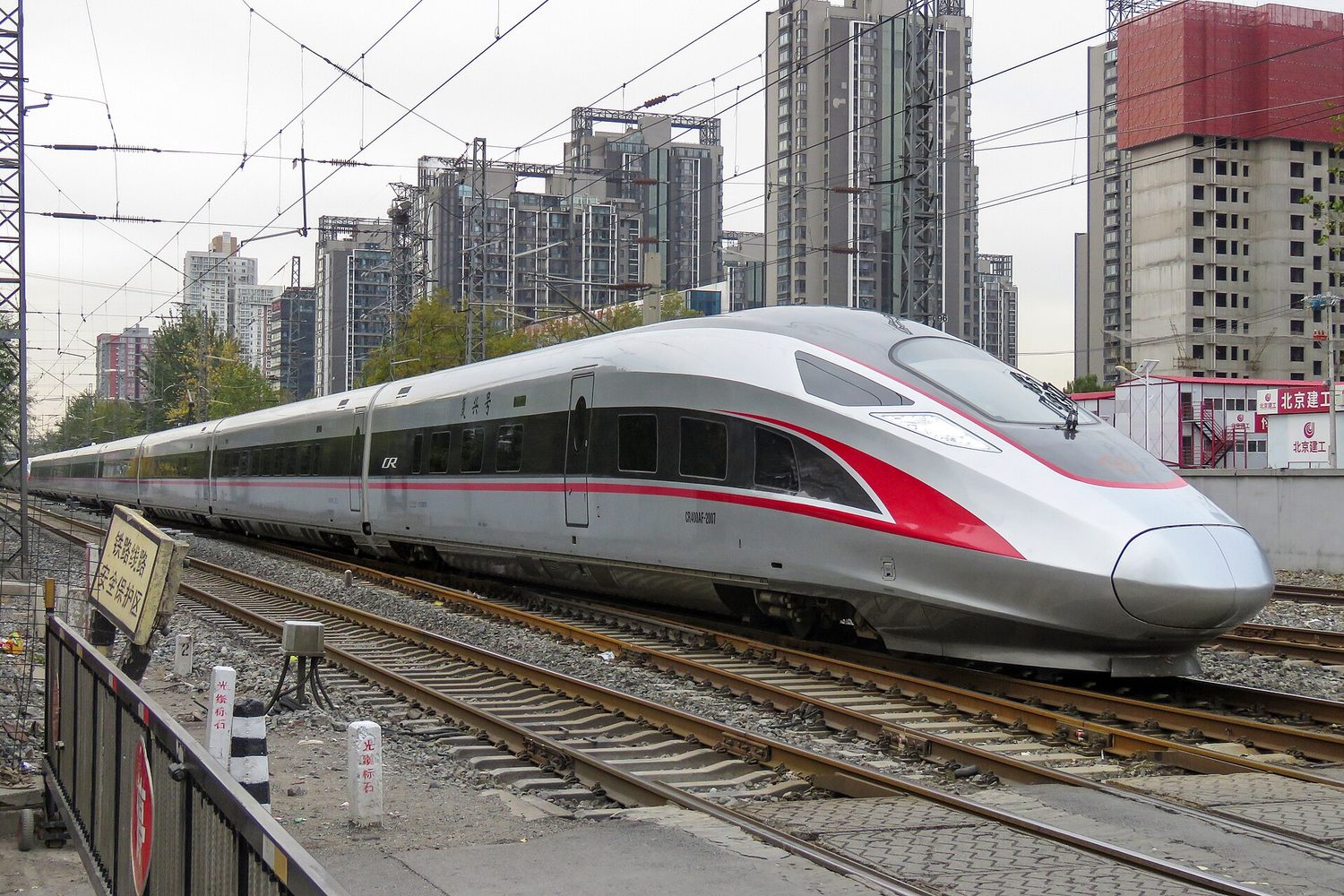
Beijing to Shanghai is 1,318 km, roughly London to Warsaw. The fastest G-series service covers that in 4 hours 18 minutes, leaves from a station on the metro, and lands you in the middle of Shanghai rather than 40 km outside it. On paper a flight is two hours in the air. In practice, once you add the airport bus, the security queue, the baggage belt and the taxi at the far end, it is five to six hours of your day.
What surprises people is how uneventful the train is. You walk into Beijing South twenty minutes before departure, put your passport on the gate, and step onto a carriage that leaves on the second. There is no check-in theatre, no duty-free corridor, no announcement telling you the gate has changed. Four hours later you are standing over the Huangpu.
The options, in one table
| Option | Journey time | Second class / economy | When it makes sense |
|---|---|---|---|
| G train, fastest services | 4h18 – 4h40 | ¥553 | You want a morning or early afternoon arrival |
| G train, stopping services | 5h30 – 5h55 | ¥553 – ¥662 | Late departures and awkward dates |
| D train, overnight sleeper | 11h – 12h | ¥304 – ¥560 by berth | You would rather not pay for a hotel night |
| Flight, city centre to city centre | 5h – 6h | ¥700 – ¥1,500 | You are connecting at Pudong, or flying onward abroad |
The sleeper deserves a second look if your budget is tight and your calendar is full. A soft berth on the overnight D service leaves Beijing South around 19:00 and puts you into Shanghai before eight in the morning. You lose a night in a bed you paid for and gain a full day of sightseeing, which on a ten-day trip is worth more than the ¥200 you save.
Two stations, and picking the wrong one
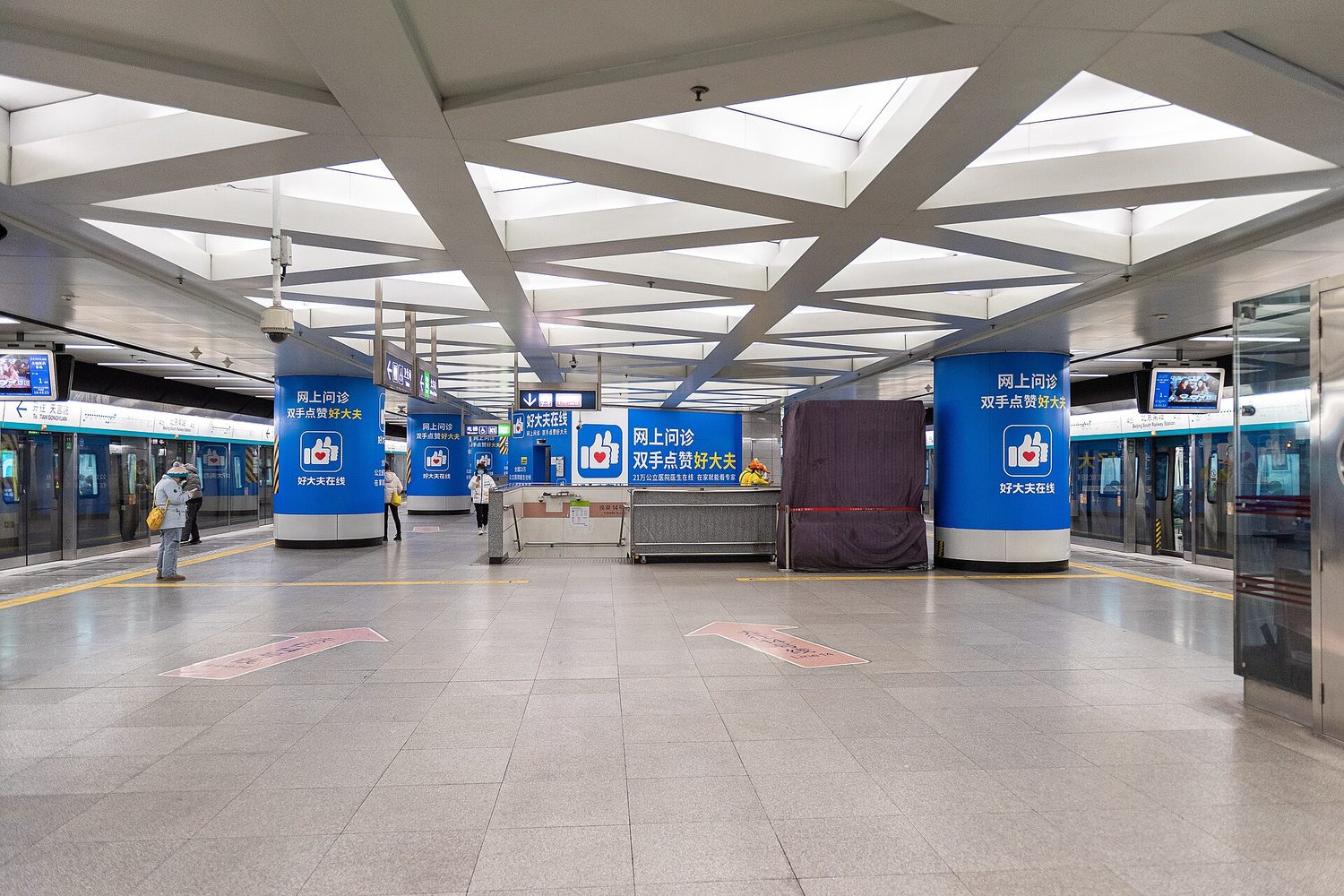
Almost every Beijing–Shanghai train runs between Beijing South and Shanghai Hongqiao, and both are easy. Beijing South connects to metro lines 4 and 14 and sits a 20-minute ride from Qianmen. Shanghai Hongqiao is 15 km west of the Bund and connects to lines 2, 10 and 17, which matters because line 2 is the one that reaches both the airport and the centre.
A handful of services use Shanghai station instead. That is not a disaster — it is closer to the old city than Hongqiao is — but if you have booked a hotel on the west side, expect a 40-minute cross-town ride rather than a 20-minute one. Check the station name on the ticket, not the city.
When a plane is the better call
Three situations justify it. You are connecting to an international flight at Pudong, and a single through-ticket saves you a separate transfer across the city. You need to travel after the last fast train, which leaves late afternoon. Or you are flying into Daxing and out of Pudong on a route where the airline already owns the transfer risk.
Beyond that, flying buys you two hours in the air and hands back one and a half on the ground. The domestic security lanes at both ends are efficient, but Capital and Daxing are 30 km and 46 km from central Beijing respectively, and Pudong is 30 km east of People’s Square.
Booking it, in order
- Tickets open about 15 days ahead. On this line the fastest morning departures go first, so buy the day your date releases rather than the week you fly.
- Book through the official 12306 app or site. Your passport number is the ticket; there is nothing to collect at the station.
- At the barrier, scan the passport photo page. If the gate refuses, walk to the manual channel — staff there handle foreign passports dozens of times a day.
- Be on the platform ten minutes early. Doors shut 30 seconds before departure and the train does not wait for anyone, whatever the ticket says.
What the trip costs all in
Second class at ¥553 plus metro fares at both ends of ¥3–9 puts a one-way journey near ¥570. Add a station breakfast of soy milk and baozi for ¥10–15 and you are under ¥600 door to door, which is less than a mid-range hotel night in either city. First class at around ¥933 and business at ¥1,748 buy you a wider seat and a quieter carriage, not a faster train.
Questions people actually ask
How far ahead can I book a Beijing to Shanghai train?
Around 15 days on the official 12306 system, and that is when the fastest morning services start disappearing. If your travel dates are fixed, set a reminder rather than waiting until you land in China.
Is second class comfortable for five hours?
Yes. The seats are 3+2 across with decent legroom and a fold-down table, and the ride is smooth enough to work or sleep. First class is 2+2 and quieter, but the difference is comfort rather than capability — the journey time does not change.
Do I need a printed ticket?
No. Your passport is the ticket and the barrier reads it. Keep the booking reference on your phone in case staff need to look anything up, especially if you booked through a third-party site rather than 12306.
Fares and timings on this route move with the seasonal timetable. Figures were verified against the operator timetable in mid-September 2026 and should be read as the right order of magnitude, not a quote.