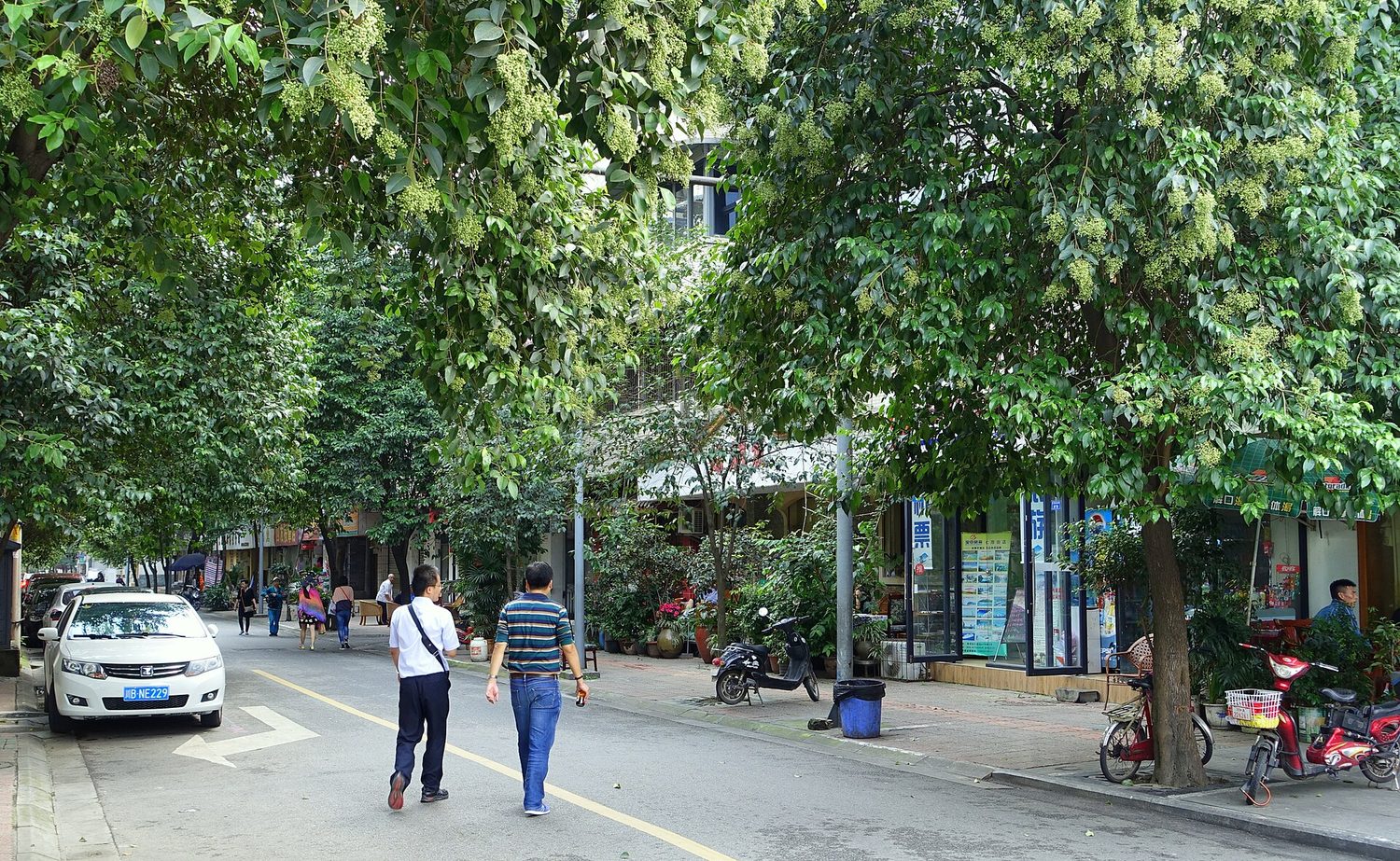
Chengdu dialect: what locals actually say
The first thing you notice is the speed. Chengdu speech moves at approximately 15% faster than the careful, staccato Beijing standard you practiced in language apps. Vowels slide into each other without resetting the mouth. The final syllables of polite phrases vanish entirely. You will hear a melodic quality that feels like a hum rather than a shout. This is not sloppy speaking; it is efficient. The third tone, the dipping one, often flattens into a low, steady pitch. This creates a sound that is softer and rounder than the sharp, angular Mandarin used in official broadcasts. Your training ear expects crisp boundaries between words. Here, words bleed. You will feel like you are understanding the rhythm but missing the data. This gap causes the initial panic. You nod because the tone seems friendly. You are actually missing the specific request for payment. The vowel shift turns clear distinctions into soft murmurs. This is the filter for your first week.
The first thing you notice is the speed. Chengdu speech moves at approximately 15% faster than the careful, staccato Beijing standard you practiced in language apps. Vowels slide into each other without resetting the mouth. The final syllables of polite phrases vanish entirely. You will hear a melodic quality that feels like a hum rather than a shout. This is not sloppy speaking; it is efficient. The third tone, the dipping one, often flattens into a low, steady pitch. This creates a sound that is softer and rounder than the sharp, angular Mandarin used in official broadcasts. Your training ear expects crisp boundaries between words. Here, words bleed. You will feel like you are understanding the rhythm but missing the data. This gap causes the initial panic. You nod because the tone seems friendly. You are actually missing the specific request for payment. The vowel shift turns clear distinctions into soft murmurs. This is the filter for your first week.
Sichuan dialect: vocabulary of comfort
Sichuan-hua is Southwestern Mandarin — the sentence structure matches, the tone contours slide, and the vocabulary leans hard into comfort words. Teahouse uncles will run whole conversations in it around you. Four words carry most of the emotional range.
| Standard | Chengdu says | Sounds like | Meaning |
|---|---|---|---|
| shūfu | bāshì | bah-shr | comfortable, great |
| hǎo de | yàodé | yow-duh | okay, will do |
| duōshao qián | hǎoduō qián | how-duo chyen | how much |
| méiguānxi | mò lái tóu | mo lie toe | it doesn’t matter |
| liáotiān | bǎi lóngménzhèn | bye long-men-jen | to chat (lit. "set up the dragon gate array") |
Three tones replace the standard four
Standard Mandarin relies on 4 distinct tones to separate meaning. Chengdu dialect compresses these. The key difference involves the second and third tones. In Beijing, a rising tone (2nd) and a dipping tone (3rd) are clearly distinct. In Chengdu, the 2nd tone often drops. The 3rd tone becomes a flat, low pull. This means two words that sound completely different in the north sound nearly identical here. A visitor relying on tone memory will mishear commands. You expect a question mark in the pitch. You hear a statement. The local speaker uses 3 primary pitch contours for daily speech. This reduction simplifies the load for the speaker but breaks the decoder for the learner. You wait for the sharp rise that signals 'yes'. It does not come. You get a flat drone. This is not indifference. It is the local norm for affirmation. The loss of the high-falling tone on certain common words creates further confusion. You hear a command as a suggestion. This leads to the classic mistake of ordering the wrong item. The server used the correct local tone. You heard the wrong standard tone.
Where the dialect holds power
You hear the strong dialect in markets and small eateries. In a wet market 200 meters from your hotel, vendors shout prices in full Chengdu-speak. The speed is aggressive. In taxis, the driver switches to a hybrid. You catch 40% of the words. The official counters at train stations use standard Mandarin. The staff there are trained for provincial traffic. They speak slowly and clearly. Tourist sites near the panda base use a polite, standard register. Younger staff in chain stores speak a diluted version. They drop the heavy slang but keep the vowel slides. Avoid expecting dialect in five-star hotels. The front desk staff are from across the province. They use the standard model to avoid misunderstanding. Old-town shops are the reverse. The owners speak in thick layers of local idiom. You need context clues there. The gap between the official voice and the street voice is wide. Do not let the polite hotel standard fool you. Step out the back door and the pitch drops. The speed doubles.
Do not attempt to mimic the slide
Attempting to copy the vocal fry or the soft endings usually backfires. You sound like a caricature. Locals recognize the fake immediately. It creates distance. Correcting a local on their pronunciation is a social error. It implies their native speech is wrong. This shuts down the conversation. A server will stop helping you. Assume standard Mandarin works everywhere. It does not. You will get polite but vague answers. The server will nod and look at their phone. This is the consequence of failing to adapt your listening. You must accept the hybrid nature of the interaction. Use your standard Mandarin for the nouns. Listen for the local rhythm. Do not force the tones. Let the meaning come from context. If you try to match the speed, you will stumble. The locals will wait. This patience is finite. After 3 miscommunications, they switch to gestures. This is frustrating for you. It is efficient for them. Respect the boundary. Your goal is comprehension, not performance.
Six phrases you will actually hear
You will hear 'fān' (to be delicious) constantly. This is the gold standard for food. It means more than 'good'. It implies satisfaction. 'Bāshì' (comfortable) appears in the already filed list. You must know 'xīnxiān' (fresh) is pronounced with a softer 'x'. It sounds like 'shin-shin'. 'Zǒuqǐ lái' (let's go) is the command to move. The 'q' is soft. You will hear 'péngyou' (friend) used for anyone. It is a term of endearment. 'Déxié' (good) is used for agreement. The 'dé' is short. 'Méiyǒu' (no) often drops the 'u'. It sounds like 'méi-y'. These six phrases cover 50% of casual interactions. Learn them in the local pitch. Do not use the textbook tones. The local pitch shows you are trying to listen. This small effort builds trust. The vendor will give you extra greens. The driver will check the mirror for you. These words are the currency of daily life. Keep them ready. Use them with a smile. The meaning is clear even if your accent is wrong. The intent is what matters.
Why it differs from Chongqing
Chongqing is 300 km south. The dialect there is harder. The tones are sharper. Chengdu is softer. A phrase that gets a laugh in Chongqing sounds flat here. The local identity is tied to this softness. It is part of the 'panda' brand. The city markets itself as relaxed. The speech matches. If you use Chongqing slang in Chengdu, you sound aggressive. The locals perceive it as rude. The vowel shift in Chengdu is more rounded. Chongqing keeps the sharp edges. This difference matters for social cues. A compliment in Chongqing feels like a shout. In Chengdu, it feels like a murmur. Adjust your volume. Lower your pitch. The nearest big city is Chongqing. The next province is Yunnan. Yunnan has its own distinct tones. They are nothing like Sichuan. Do not mix them. The confusion leads to awkward pauses. Stick to the Chengdu soft sounds. This aligns with the local self-image. The city wants to be pleasant. Your speech should match that goal. Soft vowels work. Sharp consonants do not.
Questions people actually ask
Can I pay with Alipay if I only speak English?
Yes. The payment process is visual. You scan the code. The amount is in numbers. The merchant does not need to understand your accent. They see the payment confirmation screen. This screen is in Chinese, but the checkmark is universal. You can smile and nod. This is sufficient. The language barrier is minimal at the point of sale. Keep your app ready. The connection is fast in most shops.
Do hotel staff speak English well?
Most front desk staff speak functional English. They can book taxis and answer basic questions. Their vocabulary is limited to tourism terms. Do not expect deep conversation. Use short sentences. Avoid idioms. Write down your destination. This helps them copy it into the taxi app. The young staff are better at English than the older staff. Ask for a younger person if you get stuck. The language skill has improved in the last 5 years.
Is the food spicy in every restaurant?
No. You can order mild dishes. Say 'bù là' (not spicy). The cooks understand this. Many dishes are naturally mild. Soups and steamed items are safe. Hot pot is always spicy. You cannot change this. Choose a mild broth if you want control. The oil still carries heat. Be careful. The 'comfort food' reputation does not mean 'bland'. It means 'flavorful'. The flavor comes from sauce, not just chili. Ask for sauce on the side.
How do I ask for directions without a map?
Use landmarks. People do not know street numbers well. They know the big buildings. Ask for the 'xuéxiào' (school) or 'dàlóu' (big building). Point in the direction you want to go. Use hand gestures. Show your phone screen with the destination. This combines both methods. The local will nod and point. Follow the finger. Do not rely on verbal directions alone. The language barrier makes complex turns impossible. Stick to straight lines. Turn at the obvious landmark. This strategy works in 90% of cases.