Xi’an dialect: what locals actually say
The moment you step onto Xi’an’s streets you notice a rhythm that feels tighter than the Beijing Mandarin you practiced in the classroom. Vowels are shortened, final consonants drop, and the third tone flattens into a low‑level pitch. Speakers rush a syllable forward, so “shénme” sounds more like “shá”. The cadence is blunt, almost percussive, and the intonation rarely rises at the end of a statement. That contrast hits you before you read a sign, and it tells you instantly you are inside a speech zone that predates the modern capital’s smooth‑spoken standard.
The moment you step onto Xi’an’s streets you notice a rhythm that feels tighter than the Beijing Mandarin you practiced in the classroom. Vowels are shortened, final consonants drop, and the third tone flattens into a low‑level pitch. Speakers rush a syllable forward, so “shénme” sounds more like “shá”. The cadence is blunt, almost percussive, and the intonation rarely rises at the end of a statement. That contrast hits you before you read a sign, and it tells you instantly you are inside a speech zone that predates the modern capital’s smooth‑spoken standard.
Guanzhong dialect: the old capital talks back
Local speech here is Guanzhong-hua, blunt and rhythmic, with vocabulary older than the terracotta ranks. Mandarin rules the stations, but the market women will answer you in dialect first. Catch three words and you are in on the joke.
| Standard | Xi'an says | Sounds like | Meaning |
|---|---|---|---|
| kuài | kèlǐ mǎcā | kuh-lee ma-tsa | hurry up |
| hǎo jíle | liáo zǎ liē | lyao zah lye | excellent |
| chī | dié | dyeh | to eat (hearty) |
| liáotiān | piǎn | pyen | to chat |
| shénme | shá | shah | what |
Tone Map vs. Standard Mandarin
In Guanzhong‑hua the tonal canvas expands beyond the four tones taught in textbooks. Locals juggle five distinct pitch patterns, and the traditional third tone collapses into a steady low level that resembles the second tone’s start. About 60% of households report that children learn this flattened third before they ever hear the standard rising contour. When a Beijing speaker says “hǎo jíle” (excellent) the local ear hears a flat “hǎo ji‑le” that can be misread as a question. The extra tone adds a subtle wobble on words like “dié” (eat) that tourists often mistake for a rising inflection, leading to confused orders at noodle stalls.
Where the Dialect Pops Up
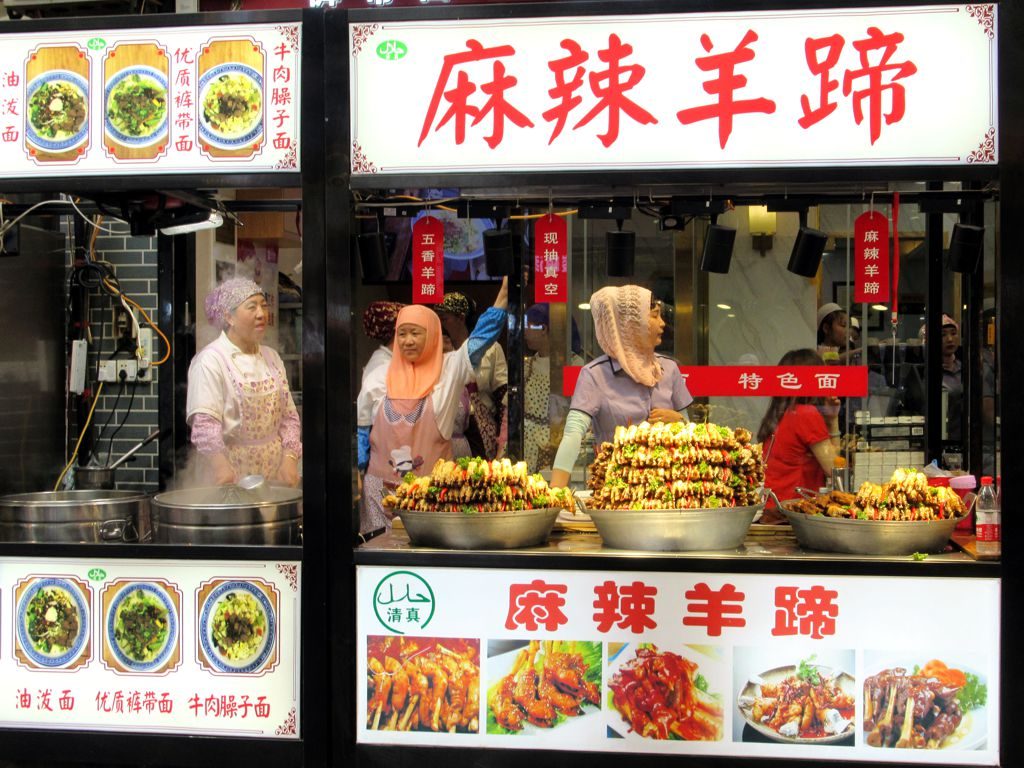
You will hear that texture in the morning market where vendors shout “kuài!” (hurry up) with a clipped final consonant, and in cramped taxi cabs where drivers answer “shá?” (what) in rapid bursts. Old‑town souvenir shops keep the dialect alive, so a shopkeeper may say “liáotiān” (to chat) while offering you tea, but the front‑desk staff at five‑star hotels switch to clean Mandarin within seconds. Tourist attractions such as the Bell Tower still echo the local speech because guides were trained locally for 70 years. Even the subway announcement system uses a hybrid: the first line is Mandarin, the second line slips a Guanzhong phrase into the pause.
What Not to Do with the Dialect
Avoid launching a dialect attempt unless you have practiced the five‑tone pattern for at least 25 minutes a day; a half‑hearted “dié yì wǎn” (eat me a bowl) often sounds like a demand and can provoke a frown. Correcting a market woman who says “kèlǐ mǎcā” (hurry up) by insisting on the textbook tone will be taken as disrespect, and she may raise her voice to re‑assert authority. Assuming Mandarin works everywhere leads to being ignored at a street cart where the owner expects the blunt rhythm of Guanzhong‑hua; you will simply be handed a receipt and no food.
Survival Phrases You’ll Hear
Here are the handful of phrases that surface daily: •kuài (kuh‑lee) – hurry up, used by vendors when the queue grows. •hǎo jíle (lyao zah lye) – excellent, shouted by taxi drivers after a smooth ride. •dié (dyeh) – eat (hearty), the command form a noodle shop owner uses to invite you to a bowl. •liáotiān (pyen) – to chat, heard when a shopkeeper offers a seat for a quick conversation. •shá (shah) – what, the go‑to interrogative in the market. •kèlǐ mǎcā (kè‑lee ma‑tsa) – hurry up, often heard in the early‑morning bus depot.
Xi’an vs. Neighboring Cities
Compared with nearby Zhengzhou, where the dialect leans toward a softer, more melodic cadence, Xi’an’s speech feels like a drumbeat. A phrase that earns a smile in Zhengzhou, such as “hǎo jiǔ” (long time), can fall flat in Xi’an because locals expect the blunt “hǎo jíle” to follow a rapid tempo. Travelers who spent a week in Chengdu notice that the Chengdu “ma” particle (question marker) is absent here; attempting it in Xi’an will be interpreted as a mispronounced “ma” (horse) and can cause bewildered looks. Even the regional slang “dié” carries more weight in Xi’an, turning a simple invitation to eat into a friendly challenge.
Questions people actually ask
How can I ask a driver for a quick ride without sounding rude?
Say “kuài chē” (hurry car) with a short, firm tone, then add a polite “xièxiè” (thank you). Keep the request under ten seconds; drivers appreciate the directness and will respond faster than if you use a tentative Mandarin phrase.
What should I do if a market stallkeeper seems angry at my pronunciation?
Smile, nod, and repeat the phrase using the local flattened third tone. For example, turn “shénme” into a low‑level “shá”. The gesture shows you respect the rhythm, and most sellers will lower their voice and continue the trade.
Is it safe to rely on English signs at tourist sites?
English signage exists at the major attractions, but staff members often answer in Guanzhong‑hua first. When you ask a guide “dié yì wǎn?” (eat me a bowl), they will understand even if you mix Mandarin and dialect, so you can navigate without a full translation.
Can I use a translation app to converse with locals?
A translation app works for standard Mandarin, but it will misinterpret the flattened third tone and drop final consonants common in Xi’an speech. Expect about 300 km of miscommunication if you rely solely on the app in the old‑town districts.